
 I wrote this piece for my weekly column. It was originally published in the Big Sandy Mountaineer in June of 2015.
One of the worst sins I’ve ever committed was actually committed over several years. During my early years working in ministry, I pretended to be perfect. When I left for work every day, I put on my “perfect Christian” mask. I hid any struggle with sin, temptation, and anger. I made excuses and ignored my own shortcomings. Eventually, I stopped talking openly with anyone about anything that might look un-Christian in my life. When I taught, the only sins I ever acknowledged were innocuous, like driving too fast, which is an imperfection of mine that’s well known to any reader of this paper’s traffic ticket listings. I believed that perfection was expected of minsters, and because I wasn’t perfect, I faked it. It may seem excessive to identify this as a terrible sin, but it is because it is a denial of the central message of Christianity: that all people sin and need forgiveness. Pretending to be perfect is self-deceiving and denies our need for God. Beyond distancing us from God, it also drives others away from Him, either because they see our hypocrisy or they see being “good enough” as unattainable.
The saddest misconception about Christianity that drives folks away from knowing God exists primarily amongst Christians: the myth of perfection. Whereas the previous columns in this series have largely addressed those who walk away from God in frustration/hurt, this week will primarily address folks in the church who believe this falsehood.
Believing we are, or ought to be, perfect is spiritual poison. When we look at the life of Jesus, there is no-one that he strikes out against more vehemently than religious folks, specifically the Pharisees, who couldn’t see or confess their own failings. Most were so convinced of their own perfection that they couldn’t ask for forgiveness because they didn’t believe they needed it. They lived for the praise of others, thrived on comparing themselves to “sinners”, and constantly bragged of their righteousness. This puffing up results in blindness to the seriousness of our own sins.
False perfection is also poisonous to relationships. Maintaining the illusion of perfection keeps us from confessing or seeking help. While living this way, I often wished I could talk about my struggles, but wouldn’t do so because I did’t want anyone to know how imperfect I am. Hiding secrets isolates us. Conversely, openness and accountability knits us together in community, because calling on each other in times of need teaches trust and interdependence.
The most profound lesson I learned from being open happened when I talked openly about struggling with sin while teaching one day. A young man approached me afterward, tearfully opening up about his own struggles. He thanked me for being honest, because he too had been hiding everything for fear of being condemned by others. Being vulnerable provides a safe environment for others to be vulnerable. The most common response I hear to openness about my own imperfection is appreciation for being real and human.
Living life- honestly acknowledging our imperfection- is risky. It’s possible that others will judge or ostracize you for being a sinner. I discussed with a friend how tempting it is to want other Christians to be human, but not too human. It’s easy to succumb to the temptation to believe that God should forgive our brand of sin, but not the sin of others. This is the power of acknowledging our imperfection/dependance on God’s forgiveness. It emphasizes God’s mercy, rather than our self-righteousness. This makes judging others harder to justify. Awareness of our dependance helps us empathize with others in the same predicament.
 One of my favorite stories to read my daughter at bedtime is from The Adventures of Frog and Toad. In the story, Toad bakes a batch of cookies. He and Frog discover that they cannot stop eating the cookies because they are too delicious. They begin to devise ways to prevent themselves from eating the cookies by making it more difficult to give in to temptation. Frog called it: “Building up willpower.” They quickly discovered that if they wanted to eat the cookies badly enough they would find a way around obstacles. Eventually, Frog throws away all the cookies and proclaims: “we have lots and lots of willpower.” To which Toad responds: “You may keep it all, Frog, I am going home now to bake a cake.” It’s a funny story with an interesting point. The problem wasn’t the cookies, the problem was that they wanted the cookies more than they wanted to not eat them. The book of James touches on this idea when it addresses the things that are in our lives that cause temptation. It’s easy to blame God for giving us such temptations. However, temptation starts in us and are a product of our fallenness. In Romans Paul describes how the sin living in us seizes upon the law of God as a standard to rebel against. Sin drives us to do things we hate. He describes sin and the ensuing temptation as powerful and ruling over our bodies. As a result of this powerful force within us, even if the things we want are not in front of us, if we want them badly enough, we will go looking for them. Mind you, it is not the case that desire itself is bad. Desire is natural. Desire for food, pleasure, leisure, security, relationships, being right, or anything else are simply a part of how people are designed. Desire becomes destructive when it loses all checks and begins to cause damage. It can be seen in decisions made simply based on a desire with no concern for inevitable consequences and what is right or wrong. A common example is carelessly spoken words that are regretted the moment they are spoken. Other examples include extramarital affairs, the seemingly iron grip that pornography seems to have over the lives of many men, addictions, eating disorders, spending problems, etc. These typically involve normally healthy desires that become distorted and get out of control. James describes this as being dragged away by our own lusts. Ultimately, it’s important to recognize that the source of the problem is within us.
 Over the past few years, I’ve read several articles arguing varying perspectives on the ideal wife portrayed in Proverbs 31. Most of these articles have argued the matter in terms of whether or not this woman is a standard model for wives and women everywhere to aspire to be the best housewife possible in serving her 1950s family or an allegory for wisdom so as to remove the unattainable ideal that just serves to discourage women into standardized gender roles. I’ll admit that these characterizations are hyperbole, but I am exaggerating the extreme sides of this debate for a reason: because this text has become a bit of a tug-o-war passage for folks in the battle over the role of women in the church. Each side pulling for a gender political stance and taking pride in their position, sometimes without bothering to ask whether or not they are glorifying Christ in their stance. My intent in this post is not to engage either of these positions, but rather to offer an analysis of the text with an eye on shedding a little light as to what believers are actually supposed to do with these passages.
 Understanding the historic context is also important for getting a solid grip on the meaning of the passage. The advice being offered isn’t being given in a culture where people typically married for love. Marriage was generally a very utilitarian institution. Wives were selected based on all sorts of considerations, most of them pragmatic. The poem is literally about choosing a wife according to high character standards. This choosing was more akin to shopping than our culture tends to immediately recognize.
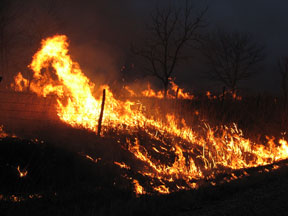 During the late summer, a persistent Sunday morning prayer request is for no fires and for safety when they do break out. The interesting thing is that it takes very little to start a blaze. The heat from the exhaust of a car parked in tall grass is more than sufficient to light a fire. A thrown cigarette or a lightning strike can destroy hundreds of acres. Dry wheat, chaff, brush, high winds, and farm equipment make for a dangerous combination during the dry season. One of the most impressive things about these fires is the response from the farmers and ranchers. When a fire breaks out in the hills, the farmers call each other, load into trucks, and put the fire out. The fire department is also called, but with 30 miles of travel to put in before they fight the fire, every set of hands matters. Most farms have water trucks and backpacks for spraying water on fires. There is a perfect model here for the church.
 gas on the blaze, every member should leap into action to put out the fire before the harvest is set ablaze. Friends, family, and neighbors wouldn’t sit around and listen to the newest juicy gossip. Instead, they would recognize the danger of a fire catching and respond by lovingly correcting the behavior and stopping the fire before it spreads. When a fire catches and begins to spread, members of the church community would charge in and make peace, throwing water on the situation. They would respond to the fire alarm with a sense of urgency that is in harmony with the danger that is presented to the body of Christ.


 with the problem. His response made me angry. He asked me how praying for them was going, also reminding me that Jesus directs his followers to pray for their enemies. I didn’t argue, because I knew I was stuck. This began a process of prayer that changed my life. It was hard to pray for the men in question, largely because I didn’t want to do it. The idea of praying for these guys who had made me miserable for months scalded me. It offended me through and through. Praying for my enemies, and as dramatic as it sounds, they were my enemies, was difficult at first. As time progressed, it became increasingly easier and I learned several important lessons.
 n though the kids sometimes tried to punch you, at least they were attacking you out in the open and to your face. It took my wife and I years to decide to agree to take on ministry employment in a church again. There is a terrible truth about churches that has to be faced by anyone who is (or was) ever a part of one. The people who are meant to become like Jesus through their lives together in the church community, often bear little resemblance to Jesus or what He taught. Over the years, I have spoken with and visited with all sorts of folks who have shared tough stories, ones that I can relate to all too well. Folks were burned by people that were supposed to love and support them. It’s a tragedy that such experiences are so common. While talking with a friend earlier this afternoon, I realized how blessed I was to have been surrounded and supported by some awesome believers who helped my wife and I find rest and healing after a tumultuous time in our lives and relationship with God. The basic lessons and realizations we came to were powerful and important.
 ons I learned was from the Apostle Paul. While studying the second letter to Corinth, I realized that Paul had come to visit the church there and been humiliated and run out of town. A group of preachers, who were more concerned with making money than preaching the gospel, had made a fool of Paul in a debate. Paul then sent Titus to salvage his relationship with the church. He was eventually reconciled with them and the false teachers run off. The thing that’s worth observing here is that Paul was stabbed in the back, mocked, and mistreated by folks who were supposed to be his brothers in Christ. His response was stern, but loving. He did not back down off of the truth, but throughout the whole ordeal he pointed to Jesus as the truth. He did not want payback. He wanted the church to be reconciled. Ultimately, he was just following the example of Christ, who reinstated Peter after he denied even knowing Christ. The lesson to be learned here isn’t that we should jump back into the mess after walking away from those who abused us. Rather, it is a model of forgiveness and grace. It is very easy to fall into bitterness after we are hurt. It is easy to attack and judge. In the end, we need to forgive in order to heal. Nothing keeps a wound fresh more effectively than picking at it forever. I do not believe that Paul simply forget when individuals proved themselves to be untrustworthy. Rather, I’d suggest that he acted “as wise as a serpent and as innocent as a dove.” Love and grace need to rule our attitude and decisions, particularly when dealing with fellow believers.
  ned without me realizing it. I started out as a balled up fist of anger, bitterness, and pain. In the name of my addiction, I had hurt those around me and acted despicably. Over time, I got healthier. Then one day I was sitting in a meeting listening to another person talk. I don’t even remember what they were talking about, but I remember hearing them say words that I had said to myself on many occasions. I nearly jumped out of my skin. It was as if I was listening to myself talk about my own addiction. Over the years, I have listened to others in recovery talk about the destruction they brought to those around them, stealing, degrading themselves, and almost every other conceivable sin. I don’t feel sickened by their sins. I feel empathy and I see myself. I hear my own thoughts. I see my own loneliness. I hear the lies I tell myself. Sometimes that’s in the past and other times its today. It is difficult to look at sometimes, but seeing my own sickness in the mirror that is others who are struggling for freedom from the slavery of addiction reminds me of what I am capable of. Remembering where I came from helps keep me free. A friend of mine often tells me that the darker the darkness of the world, the brighter the light of the cross of Jesus.
  Patching Cracks