 This morning, in an effort to recognize the first week of November, I played Christmas music loudly on the stereo in our living room. My wife was driven nuts by it and repeatedly admonished me about the inappropriateness of starting Christmas 2 months early. I didn’t point out that I was playing Christmas music a couple weeks after stores started selling Christmas junk, but I digress. I will confess that I am not a rabidly cheerful Christmas guy, but I love driving my wife nuts. Also, it clicked in my head that there’s a cool parallel to what I am preaching on this morning. You see, my sermon prep and work life have been very difficult and emotional this week. I did a funeral for a friend yesterday and am preaching on 2 Peter 3:8-14 this morning. My friend was a believer and throughout his long illness, spoke of the day he would standing in the presence of Jesus. He knew that eternity was coming and waited through pain and sickness, patient but eager to arrive in eternity. The repeated statements from my brother in the Lord have echoed in my head all week as I prepared to officiate his funeral. At the same time, I studied 2 Peter, which speaks of the Lord’s second coming and the renewal of all things. I couldn’t have picked a better text to preach following the funeral of a believer. Peter speaks about the necessity to wait on the Lord’s timing for his return and the necessity of preparing by serving and living holy. Peter wanted believers to celebrate and rejoice in the knowledge that the Lord would return, but also he wanted them to work and prepare for the day of His coming. We as believers are supposed to be a little like the folks who start listening to Christmas music on November 1st. No, we aren’t supposed to drive our neighbors and family members insane. Rather, we are supposed to have an eye on the day that is coming, when Jesus will return. That constant awareness of His return is to be joyful and it is to be a reminder. We must remember that the big day is coming, and we have important work to get done before it arrives. There are gifts to buy, invitations to send out, decorations to put up, lights to light, meals to plan, and a million other things to do before Christmas gets here, and we celebrate the coming of the Lord. In relation to the second coming, we don’t know the day or the hour and no one will know, but that doesn’t mean we don’t send invitations to our neighbors to prepare for the greatest celebration in the history of creation, when the Lord sets the world right. We have to light our lamps in the darkness and adorn the church with beautiful good works. We must do our best to clean up our world by bringing the Lord’s kingdom and encouraging His justice. In Peter’s letter, he says that in anticipation of the Lord’s return, we are to live holy lives. Simply put, we must be different. We must grow to be like Christ. We must keep an eye on the Lord’s return. This doesn’t mean that we obsess over comparing the words of Revelations with the evening news. We shouldn’t abandon our responsibilities as believers in the name of fixating on end times prophecy. Absolutely not. When Christ spoke of His return, He would compare it to workers in a household or vineyard who are given responsibilities while the master is away. When the master returned, they were rewarded or punished. We are to work diligently while we still can. The Lord is returning. Christmas is coming. Get ready. Invite your neighbors to the party. Sing praises of a God who will make the world right again. Be patient, but busy.
Patching Cracks
Trying to Be Wise In God's Eyes

Tag Archives: application
Training Hard for the Fight: A Pastor’s Guide
 In recent years, I have found the habits of elite athletes and soldiers interesting. Guys who not only do physical things well, but at a level above everyone else in the world. I am not an athlete, but am starting to appreciate the habits and mindset of folks who are top-tier in their fields. One of the interesting things I have noticed about such people is that they maintain physical discipline even when they are not doing their jobs. A former Navy Seal I follow online talks about getting up early every day to train. This is a man who is no longer fighting wars on the battlefield, but sees his own training and discipline as non-negotiable. Football legend Herschel Walker continued to train hard whether he was playing ball, between seasons, or retired. Training isn’t seen as a component of his career. Rather, it is a way of life. Pushing yourself daily to exceed yesterday’s best is never questioned. These are folks who are elite athletes and warriors by nature, not just by vocation. I am never going to be an athlete or a warrior. I am a pastor. I live a different calling. I exercise hard every day because I want to be better. This new practice and reading about the habits of these men has helped me to realize something powerful. I study and meditate on scripture verses 8 to 9 hours a week so I can teach them on Sundays. I truly love this aspect of my work. However, I struggle with spending time daily reading and studying the same book for my own edification. I also struggle with the daily discipline of prayer. This morning, I realized something convicting. While the elite athletes and soldiers I’ve been reading about do their required trainings as a part of their work, they also do it as a part of their lives. These men get up, train, then go to work and train more. They do it because it is who they are, not because it is their job. I study because it is my job, but if I want to be a man of God, I must study and pray because it is in my nature to do so. I will never be at the elite level of pastorate. I don’t really know that such a thing exists and if it did, I definitely wouldn’t want anyone to refer to me as something like that. However, I love the folks under my pastoral care. I love my family. I love to teach and preach. I love the folks in my community. I love the folks who read my writings and listen to my preaching online. Most of all, I love the God I serve. If all of this is true, and not just something I say, it really ought to be in my nature to hunger for better. I should treat my spiritual state as though my personal spiritual growth will glorify God and minister to those around me. The higher the quality of my spiritual life, the better I will minister to the people I come into contact with. Prayer and personal study are not optional to a person who loves the folks they minister to. It is training. It is conditioning. It creates in us a state of readiness for the moment when we need to love someone we are angry at or forgive the sins of our neighbor. Pastors and brothers in Christ: we must train daily in study and prayer so we can be ready for the moment God calls us to serve. Prayer must be like running. We should do it so much it is natural to us to pray without ceasing. Study should be like lifting weights. It should create strength in us to handle anything we encounter. Paul put it best when he wrote to Timothy: “Physical exercise has some value, but spiritual exercise is valuable in every way, because it promises life both for the present and for the future.” Brothers, we must train to be better because it is in our nature.
Tin Men: A Perspective On Work and Love
I originally wrote this for the Big Sandy Mountaineer in the Patching Cracks column. I have updated it for this setting.
 I recently read the Wizard of Oz and was surprised at some of the differences between the film and the novel. The most interesting difference related to the story of the Tin Man, who started out as just an ordinary woodsman. The woodsman was cutting wood to earn money to buy a home for his fiancé, who he loved dearly. While he was working one day, he accidentally cut off his own leg, which he has replaced with a mechanical one. The same kind of accident claims his other leg and his arms, all of which he replaces with mechanical limbs. He discovers that he is able to work much better as a result of replacing his body parts with machine parts. Eventually, he loses his head and splits himself in half and becomes a fully mechanical man. Now he can work all day and all night without ever resting. The problem is that his heart is gone and he no longer cares about the woman he loves. All he cares about is working. Everything else is forgotten entirely.
This story is interesting because, despite being a children’s tale, it illustrates a sad phenomena that takes place all the time in our world. I have met many men who meet a woman, fall in love, get married, then work very hard to provide her with the best life he can give her. Those are great things. The tricky part is when the man becomes so engrossed in his work that he stops pursuing his wife. It’s easy to do because men are geared to work hard. It’s part of what gives life purpose. In fact, one of the first things God did when he created Adam was give him a job to do: naming animals and working in the garden. Work holds an important place in the male identity. The problem comes when he stops loving everything else. Work becomes his mistress and he leeches time from his wife and family in order to work more. Eventually he winds up struggling with restoring peace to his relationship when conflict inevitably arises as a result of the attention paid to work and not paid to his home life. This is a natural result of misaligned priorities.
In the story, the Tin Man believes he has no feelings, but in reality he does. He becomes emotional at different times, but avoids it because crying makes him rust. This is typically the case for men who fall in love with work. Feelings are hard to deal with and it’s easier to avoid them than to deal with them. When home life becomes difficult, he works harder and hides out at the office because the world there is easier and safer. I’ve known plenty of guys who are afraid of the emotional complexity of repairing their home situation and simply sit at their desks to solve the problem. They get the reward of achievement, financial benefits, and can point to their long hours “to provide for the family” when criticized for neglecting their wives. I’m not saying that working hard is wrong. However, I am arguing that marriage comes with its own set of responsibilities that do not evaporate at 9 AM on Monday.
In reality, most men still love their wives and become easily frustrated when things don’t go smoothly at home. They want things to work right but can’t quite figure it out. Or, they work hard to provide for their families and don’t realize that they are forgetting the other things they are responsible for. Either way, work is a necessity and it’s easy to justify making it the number one priority in life. However, that is not the way God designed us to be.
The solution to this issue in our lives is to acknowledge the importance of our family relationships and focus on them. Work is important, but it is not all-important. The cool thing about the book is that the wizard doesn’t actually do anything for the Tin Man. He just convinces him that he still loves his fiancé so that he will act like it again. The same is true of most men. They can fix their problems by simply acting like they love their wives: showing them attention, doing nice things for them, having conversations again, going on dates, and all the other stuff they did when they were dating. This is really just a matter of making our outward actions reflect our inward reality. It’s really not that hard to do. Most men did it well when they were younger. They just have to decide to do it again. I would suggest that this is encapsulated well in Paul’s direction to “love your wife like Christ loves the church.” Love her. Meet her needs. Put your own self second. Have a heart for loving and serving.
Faking Spirituality
 I wrote this piece for my weekly column. It was originally published in the Big Sandy Mountaineer in June of 2015.
One of the worst sins I’ve ever committed was actually committed over several years. During my early years working in ministry, I pretended to be perfect. When I left for work every day, I put on my “perfect Christian” mask. I hid any struggle with sin, temptation, and anger. I made excuses and ignored my own shortcomings. Eventually, I stopped talking openly with anyone about anything that might look un-Christian in my life. When I taught, the only sins I ever acknowledged were innocuous, like driving too fast, which is an imperfection of mine that’s well known to any reader of this paper’s traffic ticket listings. I believed that perfection was expected of minsters, and because I wasn’t perfect, I faked it. It may seem excessive to identify this as a terrible sin, but it is because it is a denial of the central message of Christianity: that all people sin and need forgiveness. Pretending to be perfect is self-deceiving and denies our need for God. Beyond distancing us from God, it also drives others away from Him, either because they see our hypocrisy or they see being “good enough” as unattainable.
The saddest misconception about Christianity that drives folks away from knowing God exists primarily amongst Christians: the myth of perfection. Whereas the previous columns in this series have largely addressed those who walk away from God in frustration/hurt, this week will primarily address folks in the church who believe this falsehood.
Believing we are, or ought to be, perfect is spiritual poison. When we look at the life of Jesus, there is no-one that he strikes out against more vehemently than religious folks, specifically the Pharisees, who couldn’t see or confess their own failings. Most were so convinced of their own perfection that they couldn’t ask for forgiveness because they didn’t believe they needed it. They lived for the praise of others, thrived on comparing themselves to “sinners”, and constantly bragged of their righteousness. This puffing up results in blindness to the seriousness of our own sins.
False perfection is also poisonous to relationships. Maintaining the illusion of perfection keeps us from confessing or seeking help. While living this way, I often wished I could talk about my struggles, but wouldn’t do so because I did’t want anyone to know how imperfect I am. Hiding secrets isolates us. Conversely, openness and accountability knits us together in community, because calling on each other in times of need teaches trust and interdependence.
The most profound lesson I learned from being open happened when I talked openly about struggling with sin while teaching one day. A young man approached me afterward, tearfully opening up about his own struggles. He thanked me for being honest, because he too had been hiding everything for fear of being condemned by others. Being vulnerable provides a safe environment for others to be vulnerable. The most common response I hear to openness about my own imperfection is appreciation for being real and human.
Living life- honestly acknowledging our imperfection- is risky. It’s possible that others will judge or ostracize you for being a sinner. I discussed with a friend how tempting it is to want other Christians to be human, but not too human. It’s easy to succumb to the temptation to believe that God should forgive our brand of sin, but not the sin of others. This is the power of acknowledging our imperfection/dependance on God’s forgiveness. It emphasizes God’s mercy, rather than our self-righteousness. This makes judging others harder to justify. Awareness of our dependance helps us empathize with others in the same predicament.
Quote: Reward in Good Character

Your Bad Habits and Your Brain

This article was originally published in the Big Sandy Mountaineer 9/9/15.
There was a large wooded park with a lake behind the house my family lived in while I was attending high school. During the four years we lived in that home, my siblings and I frequently spent hours wandering through the woods around that lake. When we did, we usually walked along the trails and paths, because it was easier. Occasionally, I remember straying from the well-worn paths and crashing through the brush. This usually took longer and resulted in scratches, scrapes, and swearing to yourself that you’d stick to the path next time. The reason is obvious: well-worn pathways are easier to travel. There is a similar phenomena that takes place within the human brain. We all have a portion of our brain that controls motor functions and handles our actions/reactions during times of stress, often referred to as fight-or-flight moments. In moments when thinking isn’t possible and the body needs to act quickly, our actions will tend to follow the “well-worn paths” that exist within our brains. This is why athletes and soldiers practice the same movements over and over in training, to prepare them to act without thinking. It sometimes leads to strange behaviors under pressure. I recently read about soldiers collecting spent cartridges in combat, mimicking their repeated behavior on the shooting range. It’s a terrible decision to collect brass while being shot at, but the point is that it isn’t a decision. It’s rehearsed behavior. This is an extraordinary example, but there are far more common ones, like when a person reaches for a cigarette or drink without thinking – especially during times of stress. There’s a part of the brain that knows that a drink or a smoke helps manage stress, which makes this an easy pathway to develop in our brains.
A far more common example of this is seen in bad habits, particularly communication and coping habits that folks develop in their relationships. We learn to fight certain ways, and breaking those habits is difficult because it’s what we’ve memorized through repeated practice. We know our arguing strategies or our escape plans and go to them almost instinctively. Married couples often find themselves having arguments that follow the same course as every previous argument they’ve had over the last several years. Husbands sometimes respond to arguing by shutting down and running for the safety of the tv, late work days, or just hanging out in the garage. Wives learn to argue as effectively as possible or to hide out by focusing on the kids or some other part of life other than their spouse. The pattern repeats and repeats, even when it doesn’t make sense anymore or when both parties realize and acknowledge that it’s making them miserable. This is largely because they have found a pathway in their brains that works, even if it doesn’t. This easy path becomes the “go to” rut that they get stuck in, largely because it is practiced and repeated so often. Changing these trained behaviors can be terribly difficult, as anyone who has ever tried to break a bad habit knows. Success can frequently be short-circuited by new stress or frustration, which sends the individual running back to the old behavior. The last few installments of this column have looked at poor communication habits that develop in marriage. Part of what makes these habits so very difficult to break is that developed pathway. We learn them and they stay learned until we unlearn them. Unlearning involves an intentional effort to change our attitude and that couples work as a team in changing the relationship patterns. Only by intentional working together, sometimes with the assistance of a counselor, (or by an act of God) are most of well-worn pathways replaced with new healthier ones. The first step is always to acknowledge the problem and choose to work toward overcoming the habit.
Sunday’s Sermon Audio- Judges 1:1-7: Starting Strong
 This week’s sermon is the first in the summer series on the book of Judges. The audio did not pick up the first two minutes of the message… here is the basic introduction:
Rhinos can run 30 mph and can only see 30 feet in front of them. This is why a herd of rhinos is called a “crash.” So, if you are standing in a field and a rhino charges at you, it’ll likely crash into you. Here’s the question, is it your problem or the rhino’s problem? Of course, it’s your problem. In fact, whatever gets in a rhino’s way has a problem.
Frog, Toad, Cookies, and Temptation
Originally published in the Patching Cracks column in the Big Sandy Mountaineer 4/24/14. I have done some some editing and made some additions here.
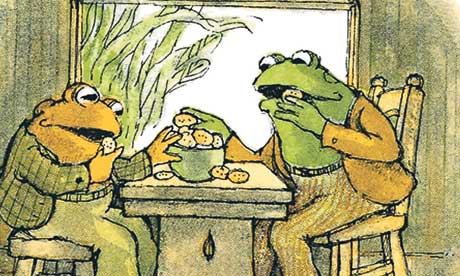 One of my favorite stories to read my daughter at bedtime is from The Adventures of Frog and Toad. In the story, Toad bakes a batch of cookies. He and Frog discover that they cannot stop eating the cookies because they are too delicious. They begin to devise ways to prevent themselves from eating the cookies by making it more difficult to give in to temptation. Frog called it: “Building up willpower.” They quickly discovered that if they wanted to eat the cookies badly enough they would find a way around obstacles. Eventually, Frog throws away all the cookies and proclaims: “we have lots and lots of willpower.” To which Toad responds: “You may keep it all, Frog, I am going home now to bake a cake.” It’s a funny story with an interesting point. The problem wasn’t the cookies, the problem was that they wanted the cookies more than they wanted to not eat them. The book of James touches on this idea when it addresses the things that are in our lives that cause temptation. It’s easy to blame God for giving us such temptations. However, temptation starts in us and are a product of our fallenness. In Romans Paul describes how the sin living in us seizes upon the law of God as a standard to rebel against. Sin drives us to do things we hate. He describes sin and the ensuing temptation as powerful and ruling over our bodies. As a result of this powerful force within us, even if the things we want are not in front of us, if we want them badly enough, we will go looking for them. Mind you, it is not the case that desire itself is bad. Desire is natural. Desire for food, pleasure, leisure, security, relationships, being right, or anything else are simply a part of how people are designed. Desire becomes destructive when it loses all checks and begins to cause damage. It can be seen in decisions made simply based on a desire with no concern for inevitable consequences and what is right or wrong. A common example is carelessly spoken words that are regretted the moment they are spoken. Other examples include extramarital affairs, the seemingly iron grip that pornography seems to have over the lives of many men, addictions, eating disorders, spending problems, etc. These typically involve normally healthy desires that become distorted and get out of control. James describes this as being dragged away by our own lusts. Ultimately, it’s important to recognize that the source of the problem is within us.
The solution for dealing with these sorts of issues begins with recognizing that if our problem is rooted internally, the solution will need to be external to some degree. The Bible describes the solution as allowing God to intervene and aid us in overcoming that which controls us. If we aren’t strong enough to defeat a problem on our own, we need someone who can aid us in doing so. Apart from a higher power intervening, we will find ourselves stuck. Paul explains this in Romans 7 & 8. New life in Jesus through God’s Spirit is the pathway to overcoming temptation. This is achieved through intimate relationship with the savior and discipleship. The Spirit supernaturally intercedes and enables us to overcome temptation. Sometimes this means confessing our sins and seeking accountability with our brothers in Christ. It begins by acknowledging to God that you are helpless to overcome your own sins and that you need Jesus to give us new life. Shortly thereafter we need to actually come under his Lordship by obeying his teachings, joining a body of believers, reading his word, and talking to him regularly.
Pink On Family and National Morality

I came across this quote from Arthur Pink today and thought it was worth sharing, particularly in light of the alarmist things I encounter in my social media feeds on a daily basis lately. It’s easy to find folks to blame for the problems in our nation. Folks post their outrage on social media, flock to politicians peddling easy answers, demand laws that will straighten up the world we live in, and pine for God to set things right. The problem with these solutions is that they are top-down fixes to a bottom-up problem. Decline and decay start in our own homes and churches. We must address our own messes before looking to those of others. In the 2 millennia since its birth, Christianity has changed the world, not through legislation and power, but through discipleship and devotion to the cause of Jesus. Fathers, follow Jesus and grow spiritually. Then, spend time with your families, loving and teaching them who Jesus is and how to follow Him. Devote yourself to your God, your marriage, your family, and your church (in that order). If you want this country to change, start with yourselves. Through prayer and discipleship, Jesus’ following grew to fill the world. It will only happen again through the same efforts.
7 ways Husbands Mess Up the Loving Things They Do For Their Wives

I love my wife. I want her to love me and think I am a great husband. Heck, I want to be the kind of husband that makes my wife feel loved, appreciated, and treasured. Further, I want her to look to me as a source of comfort, assurance, and joy. Achieving this means courting her throughout our marriage. Sitting around and wanting our marriage to grow stronger without putting forth effort is unrealistic. I also want to be faithful to God’s command that I love my wife like Jesus loved the church. This means serving her. Over and over Jesus taught that love is demonstrated through service. Over the course of 18 years of marriage, I have learned through trial and error (lots and lots of error) that simply doing things for her is a start, but it is not everything. There are all sorts of things I, and lots of husbands, do to mess up the good things we do for them. We men can be thick-headed in regards to relationships and often act stupidly in ways that mess up what we are trying to achieve. Figuring out the big pitfalls and avoiding them is a huge part of courting our wives. Here are a few I have done or have observed in others.
- We remind her that we did them. This is pretty simple. Your wife probably noticed what you’ve done. If you cleaned the house, she noticed. If you did laundry, she noticed. If you do dishes, wash the dog, wash the car, play with the kids, do yard work, write love notes, buy flowers, or anything else… she probably noticed. If she didn’t, she isn’t that concerned about it or is too tired or busy to notice right now. Eventually, she will. The more you talk about the good things you do, the less impressed she is by your effort. No one is that impressed by folks who have to blow their own horn. Serve your wife and let her notice on her own. She will. You not playing it up for points will make your acts more meaningful.
 We think it’s a bigger favor than it actually is. There are some things we do that seem like a big deal to us. These are things that she sees as something we should have been doing all along or something that isn’t that important to her. It makes more sense to understand what she is impressed by, wants you to do, or would be meaningful to her, and then do those things. It’s easy to figure out what to do. Just watching what she reacts to or just asking her will tell you most of what you need to know. Also, a single nice act is one thing and will likely be something she appreciates. However, a real impact can be made by putting effort into doing things for her regularly. There is a cumulative effect. A thousand small acts of service, performed over the course of months, will mean more than one huge one standing on its own.
- We do things she doesn’t want us to do. My wife doesn’t like surprises and isn’t moved by gifts. I spent years planning huge, elaborate surprises and giving her gifts. Neither impressed her much. I thought I was doing all sorts of things to court her, but I hadn’t bothered to learn that she loves acts of service and words of affirmation. Those sorts of things mean a lot more to her. I did what I liked, not what she liked. The point is to meet her needs.
- We expect sex in exchange. Guys, admit it. We sometimes do things for our wives because we want sex. We clean, serve, get flowers, etc. because we want sex. The problem is that if your loving gesture has an ulterior motive, she will see it as a manipulation. All your good will dissolve the moment she knows you are doing things for you, not for her. Your loving acts need to be about her. They need to be done because you love her. She is smart. She knows. In addition, if you’ve been doing your loving gestures with the expectation of sex as payment, there is a cumulative effect. You build mistrust. You may have to do better for a while before she believes that you are doing them because you love her.
- We play martyr. If you do things for her and play up the hardship on you or your sacrifice in an effort to build additional good will, it backfires. Do things because you love her, show strength in the effort, don’t make a big deal about it, and be clear that you are doing what you are doing because you love her. In the end, this the reason we court our wives: we love them. That’s what makes acts of service so powerful.
 We do it half-heartedly. Do the things you do for her as best you can do them. If you can, do them without her asking. Definitely do them without her having to nag you. Your effort and you thinking about her is what makes your actions meaningful. Don’t do a bad job and don’t procrastinate.
- You fight with her. Don’t fight with her! If she comments on something you missed when you were cleaning or something you did wrong, don’t lash out. If she doesn’t acknowledge what you did immediately or show as much appreciation as you expect, don’t lash out. I know it’s easy to get frustrated or feel hurt or feel unappreciated. Don’t fight with her about it. Doing something for her and following it up with anger or hurtful words will do far more harm than good. Take a deep breath, take a walk, think it through, don’t approach her with unrealistic expectations, whatever it takes, don’t pick a fight.
 Patching Cracks