
I originally wrote this for the Big Sandy Mountaineer in the Patching Cracks column. I have updated it for this setting.
 I recently read the Wizard of Oz and was surprised at some of the differences between the film and the novel. The most interesting difference related to the story of the Tin Man, who started out as just an ordinary woodsman. The woodsman was cutting wood to earn money to buy a home for his fiancé, who he loved dearly. While he was working one day, he accidentally cut off his own leg, which he has replaced with a mechanical one. The same kind of accident claims his other leg and his arms, all of which he replaces with mechanical limbs. He discovers that he is able to work much better as a result of replacing his body parts with machine parts. Eventually, he loses his head and splits himself in half and becomes a fully mechanical man. Now he can work all day and all night without ever resting. The problem is that his heart is gone and he no longer cares about the woman he loves. All he cares about is working. Everything else is forgotten entirely.
This story is interesting because, despite being a children’s tale, it illustrates a sad phenomena that takes place all the time in our world. I have met many men who meet a woman, fall in love, get married, then work very hard to provide her with the best life he can give her. Those are great things. The tricky part is when the man becomes so engrossed in his work that he stops pursuing his wife. It’s easy to do because men are geared to work hard. It’s part of what gives life purpose. In fact, one of the first things God did when he created Adam was give him a job to do: naming animals and working in the garden. Work holds an important place in the male identity. The problem comes when he stops loving everything else. Work becomes his mistress and he leeches time from his wife and family in order to work more. Eventually he winds up struggling with restoring peace to his relationship when conflict inevitably arises as a result of the attention paid to work and not paid to his home life. This is a natural result of misaligned priorities.
In the story, the Tin Man believes he has no feelings, but in reality he does. He becomes emotional at different times, but avoids it because crying makes him rust. This is typically the case for men who fall in love with work. Feelings are hard to deal with and it’s easier to avoid them than to deal with them. When home life becomes difficult, he works harder and hides out at the office because the world there is easier and safer. I’ve known plenty of guys who are afraid of the emotional complexity of repairing their home situation and simply sit at their desks to solve the problem. They get the reward of achievement, financial benefits, and can point to their long hours “to provide for the family” when criticized for neglecting their wives. I’m not saying that working hard is wrong. However, I am arguing that marriage comes with its own set of responsibilities that do not evaporate at 9 AM on Monday.
In reality, most men still love their wives and become easily frustrated when things don’t go smoothly at home. They want things to work right but can’t quite figure it out. Or, they work hard to provide for their families and don’t realize that they are forgetting the other things they are responsible for. Either way, work is a necessity and it’s easy to justify making it the number one priority in life. However, that is not the way God designed us to be.
The solution to this issue in our lives is to acknowledge the importance of our family relationships and focus on them. Work is important, but it is not all-important. The cool thing about the book is that the wizard doesn’t actually do anything for the Tin Man. He just convinces him that he still loves his fiancé so that he will act like it again. The same is true of most men. They can fix their problems by simply acting like they love their wives: showing them attention, doing nice things for them, having conversations again, going on dates, and all the other stuff they did when they were dating. This is really just a matter of making our outward actions reflect our inward reality. It’s really not that hard to do. Most men did it well when they were younger. They just have to decide to do it again. I would suggest that this is encapsulated well in Paul’s direction to “love your wife like Christ loves the church.” Love her. Meet her needs. Put your own self second. Have a heart for loving and serving.


 I wrote this piece for my weekly column. It was originally published in the Big Sandy Mountaineer in June of 2015.
 I am a magnet for bad habits and addictions. I know I am not alone in this. I have spoken to scores of men who have developed unwanted patterns in their work, relationships, stress management, and leisure. Part of what puzzled me about my habits over the years is that many of them are things I don’t really want to do, but it seemed like my mind would shift into automatic pilot time and again, allowing me to live out some impulse that I’d just as soon avoid. The following is a newspaper column I wrote looking at brain functions and why they make habitual behaviors so difficult to break.
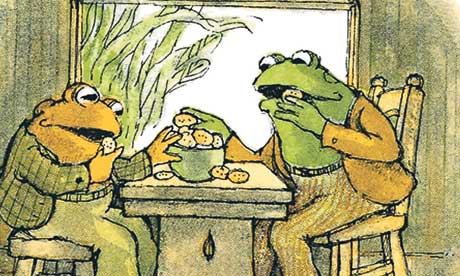 One of my favorite stories to read my daughter at bedtime is from The Adventures of Frog and Toad. In the story, Toad bakes a batch of cookies. He and Frog discover that they cannot stop eating the cookies because they are too delicious. They begin to devise ways to prevent themselves from eating the cookies by making it more difficult to give in to temptation. Frog called it: “Building up willpower.” They quickly discovered that if they wanted to eat the cookies badly enough they would find a way around obstacles. Eventually, Frog throws away all the cookies and proclaims: “we have lots and lots of willpower.” To which Toad responds: “You may keep it all, Frog, I am going home now to bake a cake.” It’s a funny story with an interesting point. The problem wasn’t the cookies, the problem was that they wanted the cookies more than they wanted to not eat them. The book of James touches on this idea when it addresses the things that are in our lives that cause temptation. It’s easy to blame God for giving us such temptations. However, temptation starts in us and are a product of our fallenness. In Romans Paul describes how the sin living in us seizes upon the law of God as a standard to rebel against. Sin drives us to do things we hate. He describes sin and the ensuing temptation as powerful and ruling over our bodies. As a result of this powerful force within us, even if the things we want are not in front of us, if we want them badly enough, we will go looking for them. Mind you, it is not the case that desire itself is bad. Desire is natural. Desire for food, pleasure, leisure, security, relationships, being right, or anything else are simply a part of how people are designed. Desire becomes destructive when it loses all checks and begins to cause damage. It can be seen in decisions made simply based on a desire with no concern for inevitable consequences and what is right or wrong. A common example is carelessly spoken words that are regretted the moment they are spoken. Other examples include extramarital affairs, the seemingly iron grip that pornography seems to have over the lives of many men, addictions, eating disorders, spending problems, etc. These typically involve normally healthy desires that become distorted and get out of control. James describes this as being dragged away by our own lusts. Ultimately, it’s important to recognize that the source of the problem is within us.

 We think it’s a bigger favor than it actually is. There are some things we do that seem like a big deal to us. These are things that she sees as something we should have been doing all along or something that isn’t that important to her. It makes more sense to understand what she is impressed by, wants you to do, or would be meaningful to her, and then do those things. It’s easy to figure out what to do. Just watching what she reacts to or just asking her will tell you most of what you need to know. Also, a single nice act is one thing and will likely be something she appreciates. However, a real impact can be made by putting effort into doing things for her regularly. There is a cumulative effect. A thousand small acts of service, performed over the course of months, will mean more than one huge one standing on its own.
 We do it half-heartedly. Do the things you do for her as best you can do them. If you can, do them without her asking. Definitely do them without her having to nag you. Your effort and you thinking about her is what makes your actions meaningful. Don’t do a bad job and don’t procrastinate.
 “As the man of the house, God put me in charge, so my wife has to obey my direction… or else she is sinning against God.” This silly line has been used time and again to justify all manner of sinful behavior, mistreatment of women, tyrannical rule in the home, and in itself has the potential to be a blasphemous statement. In fact, much of the anger that is raised the idea of men leading in the home or church is rooted in the wicked mistreatment of families using this idea as an excuse. I’ve spent the last 4 years trying to figure out how to be a Godly husband. (This is not a humble brag because I’ve actually been married for almost 18 years. Better late than never.) The biggest struggle I’ve encountered in the process has been related to the matter of headship in the home. I suspect that the struggle I am experiencing is a good thing. Not struggling with it could rise from an overly simple or self-serving understanding of the concept. It is far better to wrestle with this idea and approach the matter with fear and trembling. The understanding I have reached thus far is far from the “Woman! Get me a sandwich!” mentality that’s often the default perspective.
 Last year, I read Theodore Rex, a biography of Teddy Roosevelt. Amongst the many things that stood out to me in the life of that great man was that he took his children camping almost every night while staying at his vacation home. This was a man who was the leader of the free world, a world class intellectual, and a war hero. He was not too busy or too important to sleep under the stars with his children. I am willing to wager that for all the great things that Teddy was, his kids valued that time spent with him more than anything else. As dads, we often get distracted by our work, our hobbies, and our comforts; all to the detriment of the time we spend with our kids. Putting forth the effort to create special times with them is important. It is when the real impact of our parenting will blossom. Camping is a unique way to do this, because it takes us out of our comfort zone and away from our distraction, forcing us to pay attention to each other. For a child, camping with dad is a great adventure and a privilege. Here are a few of the things I have learned from camping with my kids.
 Plan time together. The first big camping trip I took my daughter on in the mountains included fishing. She had seen fishing in cartoons and assumed it would be a very different experience. I am confident that she did not love it. She is too impatient. However, she loved sitting in my lap, eating snacks, talking, and reeling in the only fish we managed to catch, which she was terrified of when we finally got it to shore. The time we spent together was the big part. Eventually, I will teach my kids how to pick a campsite, build a fire, cook outdoors, etc. Those activities will be great because it will involve time together. For children, the time you spend focused on them is more valuable than anything else.
 Patching Cracks