

This article was originally published in the Big Sandy Mountaineer 9/9/15.
There was a large wooded park with a lake behind the house my family lived in while I was attending high school. During the four years we lived in that home, my siblings and I frequently spent hours wandering through the woods around that lake. When we did, we usually walked along the trails and paths, because it was easier. Occasionally, I remember straying from the well-worn paths and crashing through the brush. This usually took longer and resulted in scratches, scrapes, and swearing to yourself that you’d stick to the path next time. The reason is obvious: well-worn pathways are easier to travel. There is a similar phenomena that takes place within the human brain. We all have a portion of our brain that controls motor functions and handles our actions/reactions during times of stress, often referred to as fight-or-flight moments. In moments when thinking isn’t possible and the body needs to act quickly, our actions will tend to follow the “well-worn paths” that exist within our brains. This is why athletes and soldiers practice the same movements over and over in training, to prepare them to act without thinking. It sometimes leads to strange behaviors under pressure. I recently read about soldiers collecting spent cartridges in combat, mimicking their repeated behavior on the shooting range. It’s a terrible decision to collect brass while being shot at, but the point is that it isn’t a decision. It’s rehearsed behavior. This is an extraordinary example, but there are far more common ones, like when a person reaches for a cigarette or drink without thinking – especially during times of stress. There’s a part of the brain that knows that a drink or a smoke helps manage stress, which makes this an easy pathway to develop in our brains.
A far more common example of this is seen in bad habits, particularly communication and coping habits that folks develop in their relationships. We learn to fight certain ways, and breaking those habits is difficult because it’s what we’ve memorized through repeated practice. We know our arguing strategies or our escape plans and go to them almost instinctively. Married couples often find themselves having arguments that follow the same course as every previous argument they’ve had over the last several years. Husbands sometimes respond to arguing by shutting down and running for the safety of the tv, late work days, or just hanging out in the garage. Wives learn to argue as effectively as possible or to hide out by focusing on the kids or some other part of life other than their spouse. The pattern repeats and repeats, even when it doesn’t make sense anymore or when both parties realize and acknowledge that it’s making them miserable. This is largely because they have found a pathway in their brains that works, even if it doesn’t. This easy path becomes the “go to” rut that they get stuck in, largely because it is practiced and repeated so often. Changing these trained behaviors can be terribly difficult, as anyone who has ever tried to break a bad habit knows. Success can frequently be short-circuited by new stress or frustration, which sends the individual running back to the old behavior. The last few installments of this column have looked at poor communication habits that develop in marriage. Part of what makes these habits so very difficult to break is that developed pathway. We learn them and they stay learned until we unlearn them. Unlearning involves an intentional effort to change our attitude and that couples work as a team in changing the relationship patterns. Only by intentional working together, sometimes with the assistance of a counselor, (or by an act of God) are most of well-worn pathways replaced with new healthier ones. The first step is always to acknowledge the problem and choose to work toward overcoming the habit.
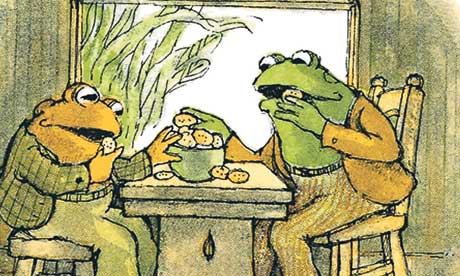 One of my favorite stories to read my daughter at bedtime is from The Adventures of Frog and Toad. In the story, Toad bakes a batch of cookies. He and Frog discover that they cannot stop eating the cookies because they are too delicious. They begin to devise ways to prevent themselves from eating the cookies by making it more difficult to give in to temptation. Frog called it: “Building up willpower.” They quickly discovered that if they wanted to eat the cookies badly enough they would find a way around obstacles. Eventually, Frog throws away all the cookies and proclaims: “we have lots and lots of willpower.” To which Toad responds: “You may keep it all, Frog, I am going home now to bake a cake.” It’s a funny story with an interesting point. The problem wasn’t the cookies, the problem was that they wanted the cookies more than they wanted to not eat them. The book of James touches on this idea when it addresses the things that are in our lives that cause temptation. It’s easy to blame God for giving us such temptations. However, temptation starts in us and are a product of our fallenness. In Romans Paul describes how the sin living in us seizes upon the law of God as a standard to rebel against. Sin drives us to do things we hate. He describes sin and the ensuing temptation as powerful and ruling over our bodies. As a result of this powerful force within us, even if the things we want are not in front of us, if we want them badly enough, we will go looking for them. Mind you, it is not the case that desire itself is bad. Desire is natural. Desire for food, pleasure, leisure, security, relationships, being right, or anything else are simply a part of how people are designed. Desire becomes destructive when it loses all checks and begins to cause damage. It can be seen in decisions made simply based on a desire with no concern for inevitable consequences and what is right or wrong. A common example is carelessly spoken words that are regretted the moment they are spoken. Other examples include extramarital affairs, the seemingly iron grip that pornography seems to have over the lives of many men, addictions, eating disorders, spending problems, etc. These typically involve normally healthy desires that become distorted and get out of control. James describes this as being dragged away by our own lusts. Ultimately, it’s important to recognize that the source of the problem is within us.
 Through my work as a chaplain and as an addiction counselor, I’ve learned a great deal about and from Alcoholics Anonymous. It’s often said that AA is simple: Go to meetings, find a sponsor, and work the 12 Steps. The challenge that many folks face when they start going to AA meetings is that they don’t want to get a sponsor or work the steps. Alcoholics often struggle with interpersonal relationships and authority, which makes finding someone to have an honest relationship of accountability with daunting. It’s not uncommon for alcoholics to try to go it alone for long periods of time without ever reading the AA Big Book or working the steps before finally breaking down and finding a sponsor. The most common reason alcoholics eventually enter a relationship with a sponsor and work the steps is that they recognize that their drinking and destructive patterns will destroy everything in their lives if they don’t overcome it. Desperation to escape slow death at their own hands drives them to reach out to another recovering alcoholic to get help in achieving lasting sobriety. Working with someone else, who has overcome similar struggles, works. They understand each other based on shared experience and are able to point each other toward spiritual growth, which is the most important component of the AA approach to recovery.
 The world of publishing has witnessed an interesting phenomena over the last few years. Sales of print books have slumped in almost every category as ebooks sales have surged. The only arm of book printing that has experienced growth over the last several years has been in the area of self-help. Self improvement book sales have defied the trend in the industry by experiencing a boom. Between books on weight loss, ways to improve your marriage, methods for overcoming depression, improve your career standing, and all manner of other do-it-yourself-to-yourself books; Americans are still buying. In our self-obsessed culture, feeling bad or inadequate is simply unacceptable. This has prompted a veritable gold rush of publishing in this area. The world of Christian books has not missed out on this trend. “Christian self-help” books are extraordinarily popular. I include quotation marks because far too often these books are simply christian flavored versions of their secular counterparts. Rather than being a distinct worldview, self-help Christianity has a tendency toward nearly identical in approach with bible verses attached to the ideas at strategic locations. At issue isn’t the notion of working to improve our health, emotional wellbeing, income prospects, or anything else we feel discontentedness toward. The issue is related to a basic philosophical incompatibility that exists between Biblical Christianity and most self-help approaches to the world.
 There’s a saying that originated in AA: You are only as sick as your secrets. The more an addict hides their sickness, the worse it will become. Without outside assistance, recovery is nearly impossible. This is particularly the case with pornography addiction. Recovery from pornography addiction comes with some significant hurdles to beginning and sustaining recovery. Perhaps the biggest challenge in beginning the pr ocess of recovery is overcoming the shame associated with the addiction. This is particularly the case because of the social stigma accompanying sexual problems. This stigma and its bedfellow, shame, keep pornography addicts hiding in the darkness, often knowing that they need help, but unwilling to seek it out of fear of the judgement of others. This is particularly the case for married addicts, who risk losing their spouse by coming clean about their problem. The secretiveness makes recovery nearly impossible because of the nature of addiction. Simply put, addiction is a disease in which the stimulus reward process in the brain begins to dominate the addict’s behavior. The process reaches a point where the addict simply cannot stop using. In fact, one of the diagnostic criteria for addiction is repeated, failed attempts to control using. Pornography addicts may do this by deciding to quit using altogether, only to start again later. They may also try to come up with artificial ways of limiting their pornography consumption or the time spent searching for or looking at porn. These efforts inevitably fail. Secrecy eliminates the support essential to the recovery process for the following reasons: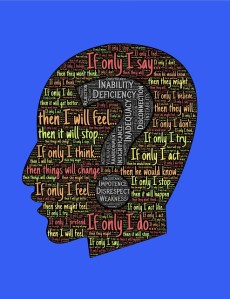
 One of the major difficulties with opening up about pornography addiction is finding appropriate people to begin talking with. Ministers or counselors are a decent place to start. Both are common in most communities. I also recommend Samson and the Pirate Monks by Nate Larkin or through the associated website:
  One of the newest trends in men’s grooming is premium shaving gear. This includes all sorts of oils, different shaving cream styles, suggested variations in shaving ritual, and assorted styles of razors. Most of these products are marketed with the basic premise that they are part of rediscovering manhood or some aspect of being a man that is authentically male. A few weeks ago, I came across an old safety razor at an antique sale, and having read all sorts of material on how they were more of a Mercedes shaving experience compared to my Pinto experience with the disposable razor, I invested $3 on a 60-year old shaver. After thoroughly researching the technique involved, I made my first few attempts at grooming with my antique razor. Incidentally, I also learned all about the proper use of a styptic pencil. For those unfamiliar with the styptic pencil, it is used to staunch blood flow for minor cuts and nicks. I also learned that the reason that multi-bladed modern razors exist is because shaving with a safety razor is difficult, more time consuming, and potentially much harder on your face. The other thing I discovered is that shaving with an antique razor, the way my grandfather probably did, didn’t make me feel more manly. I didn’t feel like I had discovered some secret to manhood. Really, all of the mystique of the experience seems to be a little overstated. Perhaps I am doing it wrong. Perhaps when I have completed the hazing period and have the scars to prove it, then I will understand. More likely, I suspect that the ads are attempting to tap into a deep-seated need in our culture. Many men are searching for a definition of manhood because they aren’t certain as to what it really means to be a man. They don’t have a clear definition or standard by which to measure themselves, and as a result, they struggle with a core component of their identity. We live in a culture that is uncomfortable with manhood and where fathers being estranged from their sons is increasingly common. Boys learn to be men by watching their fathers. They observe, imitate, and learn. Without a father who models manhood, many young men grow up with no real concept of what it means to be a man. Such young men must teach themselves about manhood. Self-taught men often grow up with learning about manhood from pop culture, peers, or not at all. Many live with a need, whether it is conscious or not, to be validated as a man or find manhood standards to live up to. These often materialize as success at work, sexual dominance, or even being the opposite of their own dads. They need not be so overt, as some men live out this need by simply swallowing it or drifting in their life course.
 Ultimately, if you ask most males what it means to be a man you will get a hodgepodge of activities that men associate with manhood and even some isolated values that are associated with male identity. What is far less common is a clear definition of the foundational values or focus of manhood and from where they are derived. This results in some perplexing behaviors that are labeled “being a man” that are likely far from a complete male identity.
 In Genesis 5:3, after the fall of man into sin, Adam has a son. Interestingly, the text says that Adam’s son was in Adam’s likeness. The reason for this shift is that man is now sinful. Instead of being as we were created to be, we are fallen. All people fall short of what they were meant to be. However, in Jesus we see the perfect representation of God and man without sin. In Him, we see what we were meant to be. Men may wander, chasing after images of manhood that fall well short of the ideal, because in Adam, we are fallen. In Christ, we can be what we were created to be. In fact, Paul writes that those who are in Christ are new creations. They become new for the purpose of imitating Christ. We can rediscover manhood in Him. The beginning of recovering real manhood is recognizing that He is the perfect model for us to emulate.
 Earlier this summer, I was out running. A few miles into my run, my right hip started to bother me. A little research provided me with a several stretches, which alleviated my discomfort. Further investigation has led me to understand that I need to do core exercises and more stretches, or I can expect further trouble down the line. Pain, like the “check engine” light on a car, lets us know that something is wrong. In this way, pain is a good thing. Without pain we would not know when we sustain injuries that need our attention. Depression is one way our brain lets us know that something is not right. We experience this discomfort and it reveals to us that we are not operating the way we were made to operate, as such, something needs to be attended to. Simply ignoring the problem won’t serve as a consistent, long-term solution, but many people choose to respond to warning signs with attempts to ignore the problem. I knew a young woman who put a piece of electrical tape over the maintenance lights in her car, so that she couldn’t see them and wouldn’t worry about what might be wrong. This is essentially what we are doing when we find ways to ignore what ourbrains are telling us through our emotions.
 There is an important principal in this. Comfort, a sense of meaning, and purpose for difficulty in relation to hard circumstances in our past can be discovered by recognizing God’s refining us through the pain we experienced, reflecting on the good it produced in us, and reflecting on how our experiences have shaped us into the person that we are. Doing so requires that we learn to take a different point of view in relation to our past. This can be terribly difficult, because hardship often creates bitterness, which tends to blind us to anything positive that may come of unfortunate incidents. It can also be hard because it’s easy to confuse finding positive outcomes with being glad a bad thing happened. We don’t have to be happy that tragedy has been present in our lives in order to recognize how hardship has shaped us. We can be thankful for what we have become without having joy at what made us the way we are. Learning to shift our perspective in relation to past pain can bring great comfort and release. As difficult as it is, it becomes easier to shift our perspective the further displaced we are from the events. This is often the first step toward healing.
 Figuring out if your solution to a problem is miracle thinking is difficult, and usually requires an outside opinion to help assess the thought. Outside feedback should come from a person who will be forward and honest enough to explain whether or not a planned solution is realistic or likely to pan out. In addition, the individual ought to have a history of making healthy choices. This sort of evaluation is especially important if an individual is dealing with an issue that is particularly difficult or if you recognize a pattern of drastic solutions that simply don’t work out.
 Denial is the component of addiction that is actually fatal. This seems counterintuitive, because addiction typically features all sorts of destructive patterns and practices that seem to the part of addiction that kills you, but the reality is that what kills the addict is the inability to recognize the severity of the situation.
 Patching Cracks