
As a dad, sometimes I feel like a shepherd with a herd of cats. My kids wander and stray constantly. I follow on their heels, catching them before they fall and kissing scarred knees. Sometimes, I don’t think they know that I’m watching them all the time. They try to get away with things as though I cannot see their mischief. They get scared, not realizing that I am nearby making sure they don’t get into too much trouble. That’s my job as their dad. When they’re hungry, I make sandwiches. When they’re thirsty, I pour apple juice. I play with them and cuddle with them. I see these things as part of being a good dad and part of loving my children. This image repeatedly came to mind as I studied Psalm 23 in preparation for this Sunday’s message. I wanted to write some of my reflections on the song before preaching on it. This post will be a little long, but there’s good stuff in this passage.
The Lord is my shepherd; I shall not want.
The idea of God as a shepherd is not unusual in the Old Testament, and it shouldn’t come as any surprise. The Israelites were a sheep-herding people, so this image would have been familiar and powerful. What is unusual about its use here is that David refers to God as HIS shepherd. Most uses of the analogy refer to God as the shepherd of the nation of Israel. David’s use here is personal. Beyond that, he describes God as giving him all that he needs. This is fleshed out as we proceed into the later verses. There’s another important idea to take away from this verse. Jesus repeatedly refers to Himself as the Good Shepherd. His sheep know His voice. He lays His life down for His flock. These are central to the identity of Christ in relation to His people. It’s important, as we look at this passage, that we consider it in light of who Jesus is and how He deals with us as believers.
He makes me lie down in green pastures. He leads me beside still waters.
David attributes all of his met needs with God’s provision and care. This passage identifies a handful of those needs, including rest (lie down), food (green pastures, the Hebrew here literally refers to freshly sprouted fields, a delicacy for sheep), refreshments (water), and leadership/direction (leads me beside). God provides, but there is some responsibility for the sheep. In the passage, God makes him lay down and leads him beside still waters. Both of these require submission. For starters, sheep are led by their shepherd, which requires that they follow. Sheep are notoriously dumb and have a tendency to wander into trouble. These provisions are associated with a willingness to lay down and rest when we are told, as well as follow when He leads. In light of Jesus’ life, we find even more depth in this expression. Jesus declares at various times that He will provide: rest for the weary, food in the form of His flesh, refreshment in the form of living water (those who drink it never thirst again), and a leader (follow me). It’s easy to assume that God’s provisions for us should be in the form of meeting our physical needs, but to His followers Jesus is the source of our rest from guilt, shame, and fear. He fills us with Himself, satisfying our longings and needs. He refreshes us when our souls are parched and we need hope. Finally, he shows us how to live in harmony with God.
He restores my soul. He leads me in paths of righteousness for his name’s sake.
The phrase restores my soul literally refers to God setting David back to the way he was meant to be. God repairs our full selves to their original state. Jesus does this by forgiving our sins, then sanctifying us through a lifetime of us growing to be like Him. We are restored, not physically from illness (though that does happen sometimes), but rather, we are reconciled to God and taught how to live holy lives, love Him and our neighbors. His leadership provides this as he leads us in paths of righteousness.Righteousness literally refers to being in right relationship with God. As we follow Christ, we are led closer and closer to God.
Even though I walk through the valley of the shadow of death, I will fear no evil, for you are with me; your rod and your staff, they comfort me.
This is one of the verses most folks recognize easily from the psalm, but it is often taken divorced from the preceding verse. If God leads us in paths of righteousness, then He’s in the lead when we enter the dark valley. Contrary to the promises of charlatan preachers, who claim that faith will ensure us easy travels and wealth, following Jesus will sometimes bring us through some dark and difficult places. We aren’t promised easy sailing or calm seas. Rather, we are promised that He will meet our needs and that we need not fear evil because we know He is with us. After all, we follow Him there. For followers of Jesus, the darkness of death has no real power. We face it knowing that Jesus took the sting of death upon Himself at the cross. Further, He proves that there will be a resurrection. Death is not the end of the road for any of us. It is no more dangerous to us than shadows we encounter. It may be scary, as darkness often is. However, we have a reassurance that He is nearby, even if we cannot see Him easily because darkness Hides him from our sight. The means of God’s protection is clear when we look at the source of comfort. The Good Shepherd’s rod and His staff are a source of comfort. Shepherds carried a large club (rod) for fighting off wild animals that might eat the sheep. They carried staffs with large hooks on the end for steering the sheep away from danger. The hook would fit around the sheep’s neck and pull them away from peril. This is the case with Jesus, who defends us and protects us. We may encounter hurt or even physical death in this life, but in Jesus, we know that God comforts, avenges, and that eternal life is assured. It’s a little like my daughter having a scary dream in the dark of night. The darkness of her room and the scary pictures in her head may make her miserable for a moment, but if she cries out, she knows her daddy is in the next room keeping watch over her and ready to comfort her. In the darkest times, we find comfort in the knowledge that Jesus has won the victory for us, He watches us, and His rod and staff are there defending/protecting us.
This verse reminds me of a quote from Winston Churchill: “If you’re going through hell, keep going.” Stopping and staying in hell never makes sense. Making camp in the valley of the shadow of death may be necessary, but don’t pick out curtains. Instead, follow the Leader. He doesn’t leave us in fear and darkness. We must know His voice and follow Him, sometimes by ear and faith instead of by sight. If we do so, we are assured that the valley isn’t our home. He will lead us to the other side.
You prepare a table before me in the presence of my enemies; you anoint my head with oil; my cup overflows.
In times of hardship and fear, it’s easy to turn to our own refreshments, rest, and nourishments in order to find escape. However, instead of real refreshment, nourishment, rest, and leadership, we find counterfeits. Alcohol and energy drinks may scratch our itch for refreshment and rest, but in the aftermath of these escapes, we find ourselves more thirst and tired than before. Television, food, sex money, and possessions are all escapes folks run to when they find themselves surrounded by enemies and passing through the shadows. Sadly, these are not real comforts or nourishments. Rather, they are illusions. We’re still in the valley and surrounded by enemies, we just try to pretend that we’re not surrounded by danger. In contrast, God provides us a feast in/with/through His Son, even when we find ourselves in dark/desperate circumstances. Further, He anoints our head with oil, which refers to joy, not to be confused with happiness. Joy is an abiding sense of peace and assurance. It is similar to happiness, but is deeper and coexists with sorrow. Joy exceeds our circumstances. Our cup overflows when God provides for our needs in abundance, which He does in Christ. We are given rest for our souls and water that’ll satisfy our thirst forever.
Surely goodness and mercy shall follow me all the days of my life, and I shall dwell in the house of the Lord forever.
The psalm ends with a restatement of the obvious. God’s goodness and His mercy will follow us for life. We cannot outrun God’s love for us. Even when we stray, the good shepherd will leave the 99 sheep to find us and bring us home. David, the fellow who wrote this song, wrote elsewhere that even if he made his bed in hell, God would come for him. In our darkest hours, in our moments of excruciating pain, in the times when we desperately need hope, and in the mornings when we wake up realizing that we’ve wandered away from our homes; in those times, our Good Shepherd is right there, ready to scoop us up and restore our souls.

 Less than a week before my wedding day, I lost my job. It was a terrible fit for me and in retrospect, it was a good thing. However, at the time it was a crushing blow. Going to work and providing for my family was pretty much the most important thing in the world. I had no idea how or when this happened, but I am quite certain that my pride and identity were magically tied to my ability to bring home a pay check, put a roof over my wife’s head, and food on the table. The experience shaped my attitude toward employment to this day. I don’t think my experience is particularly unique to me. Men derive much of their identity and sense of worth from their work. It lies at the core of the masculine identity, which is part of God’s design for men. We see this truth in the book of Genesis. The first thing Adam did after he was created was go to work. God put him in the garden and set him to work. It wasn’t miserable work and it wasn’t all that Adam did. He didn’t live to work. Adam tended to the garden, but he also named the animals. In addition, God recognized that Adam shouldn’t be alone, so he created a wife for him. In short, from the beginning man’s work was pretty important to him. In fact, I’d argue that Adam was designed to set his hand to tasks. If Adam was made in God’s image and God engaged in both creation and work, then it follows that work and creation would be important to Adam. One of the things I love about the creation account is that it gives us hints about the nature of men and women. The intended design is seen clearly without the haze of sin obscuring and distorting the foundational truths. In this case, the foundational truth is obvious: Men were made to work, but that’s not all they were made to do.
 In general, emotions are a difficult topic for men. This difficulty spans a broad spectrum, from emotionless stoicism on one end, to the uncontrolled passions of aggression, anger, lust, and ambition that have earned the male gender a reputation for acting as the bull in the china shop of their relationships. One of the hallmarks of a mature man is his ability to manage his emotions. This is not full repression of feeling and passionless existence. The stoic philosophers succeeded in producing incomplete men by attempting to avoid one of the fundamental strengths of man. God designed passion into men, that we might reflect his character. You cannot read the scriptures and miss God’s love, joy, sorrow, rage, and jealousy. In short, we were made in the image of a passionate God. Jesus was often angry. He loved folks passionately. He wept at the death of Lazarus, and he mourned over Jerusalem’s ongoing rebellion. It is important to understand that God’s passions are restrained by His will and holiness. Further, it is important to understand that these are qualities of God, they are not God himself.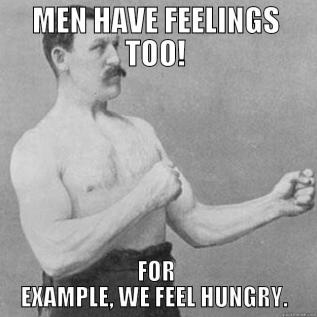





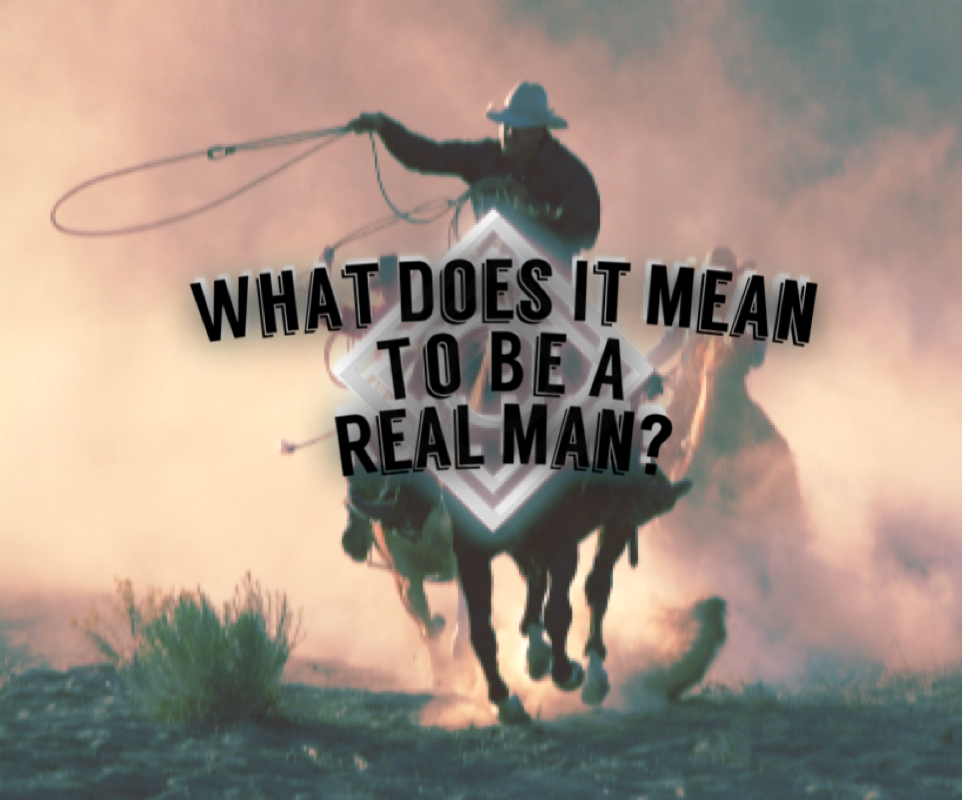
 The topic of manhood is complicated and will take more than one post to properly explore. In the short term, it’s important to establish a basic concept of manhood from which to work. I’d suggest that the place to start is with the source of manhood identity that is built into our world: Boys learn to be men by watching their fathers. This is because parents stand in God’s place in the lives of their children for the first several years of their lives. They provide life, food, shelter, moral guidance, correction, etc. Children’s conception of God is often shaped by their perception of their dads. Genesis tells us that when God created man, He created them in His own image. Fathers (and all men for that matter) are supposed to be copies of God in many respects. We are to share His heart, passions, loves, understanding of family, and work. When dads fail to model this lifestyle and teach their boys to do the same, they create problems. Fortunately, God provides us a more clarified example of manhood in the person of Jesus, who is God made flesh. A boy without a good fatherly model to follow can see ideal manhood in Jesus. When we choose to follow Jesus, our job is to learn to be like him through a lifetime of training, which is discipleship. This is why Christ’s self-sacrificing love and attitude of humble service is the example for husbands. He demonstrates the ideal manner of intimate relationship through his relationship with the church.
 It’s easy to picture Jesus as a pollyanna-type figure or as the feathered haired guy in a bathrobe that we all encountered on flannel graphs in Sunday School as kids. Fortunately, the tame version of the Son of God is far from accurate. C.S. Lewis captured Jesus’ identity best when he wrote: “He’s not safe! But, he’s good.” Jesus’ integrity, passion, penchant for action, grace, wisdom, willingness to speak openly (even offensively if necessary), self-sacrificing service, and lifetime focus on making the world better are just a few of the qualities that make Jesus is the ideal standard of manhood. He is the ideal mold from which men were meant to be cast. It is from Him that we learn how God desires us to be. Once we know, our job is to enter training to become like him.
 Patching Cracks