

This morning I overslept. I wasn’t late for an obligation or anything, rather I didn’t get up as early as I wanted to in order to achieve my morning goals. I went to the gym and felt tired. I don’t know whether it was because I was unmotivated, dehydrated, or something else. I finished my workout, but I didn’t go as hard as I wanted to. I got less done for work in the morning than I wanted, though I did get some things done. I just sorta fell short of my goal. While taking my son to swim lessons, I read an essay on pushing yourself to create the type of person you want to be and I felt convicted. Still, my physical state was dragging. My spirit was willing, but my flesh was weak. This often seems like the case when I set lofty goals: I eventually lack the time, energy, or will to achieve them. I am not great at being perfect.
My morning devotions dealt with Paul being the chief of sinners. It struck me that Paul worked harder than anyone else around him to achieve righteousness under his own steam. Yet he still failed. He later said that all his efforts were a pile of trash next to knowing Christ. In Romans 7 he acknowledged his daily struggles to overcome sin. Still he pushed hard and confessed that it was only Christ in him that made him good and righteous.
Now my morning focus turned to the manhood movement within evangelicalism and the larger point of my essay. Scrolling twitter, I came across a post from a pastor trying to shame guys into overcoming any softness in their lives. It was obvious he wants men to reach a lofty state of manliness that he has decided is the target of all believers. It was condescending, self-righteous, and unbiblical. He tried to coat it with a religious veneer, but it was a thin veil. He basically told men: Do not be soft, dependent on others, or effeminate in any way. To do so is to fail as a Christian man. It had the feel of a Christianized 300 speech. Part of what troubled me is that the type of manliness the pastor was describing is not unheard of in Christian circles. Lots of male focused Christian literature and influencers push this narrative that men should rule their homes with an iron fist, never feel emotions, shed weakness, and fight the world. The problem is that for anyone to try to live that way is purely playacting.  There is no authenticity to it. If manliness is all about eschewing “softness” or any kind of personal weakness, it is a form of farce. It eliminates wide swaths of men from the contention of manliness and rewards virtues that don’t really make a man.King David wouldn’t even qualify, because although he was a fierce warrior he was also a poet. He danced before the Ark. He wept. He had close friends who he loved. He wore his dependance on God as a badge of honor. He was a man of steel and velvet. He was also sinful.
If my manliness is derived from my ability to get up early, bring it at the gym harder than anyone else, achieve more at work, or whatever, I will always be reaching for a ring that is unattainable. My flesh and the reality of my physical limitations are always going to get in the way. I am a cracked clay pot. I can push forever, but never be “good enough” because good enough is a shifting goal post. There’s always something more. My righteousness, toughness, and discipline will always be insufficient. Or worse, they will become a point of pride that will serve as a stumbling block to myself or those around me. Paul realized that. He worked to be like Jesus, acknowledged his struggles to hit the mark, and owned his shortfalls. I think that is what I want to be. I want to be a man, doing his best to be like Jesus. I want to love my wife like Christ loved the church. Teach my son to be like Jesus. Preach the Gospel and faithful explain the scriptures to the best of my ability. Still, I am going to be unfocused and soft sometimes. I’m going to act like a selfish child when my flesh overcomes me. If I fall short but I am a tool in the hands of my master I will consider it a win. If I’m not manly enough or disciplined enough or holy enough, then the good things I do are despite my weakness and point to the fact that Christ can still work through a broken tool. When I tried to be the best and to never deal with my weaknesses, it drove me to drink and wreck everyone around me. I will try hard and Christ will do the rest. If I am weak, he is strong. If I am boasting in anything, it won’t be my manliness or toughness or anything else. It’ll be in Christ alone.
 I wrote this piece for my weekly column. It was originally published in the Big Sandy Mountaineer in June of 2015.


 I am a magnet for bad habits and addictions. I know I am not alone in this. I have spoken to scores of men who have developed unwanted patterns in their work, relationships, stress management, and leisure. Part of what puzzled me about my habits over the years is that many of them are things I don’t really want to do, but it seemed like my mind would shift into automatic pilot time and again, allowing me to live out some impulse that I’d just as soon avoid. The following is a newspaper column I wrote looking at brain functions and why they make habitual behaviors so difficult to break.
 This week’s sermon is the first in the summer series on the book of Judges. The audio did not pick up the first two minutes of the message… here is the basic introduction:
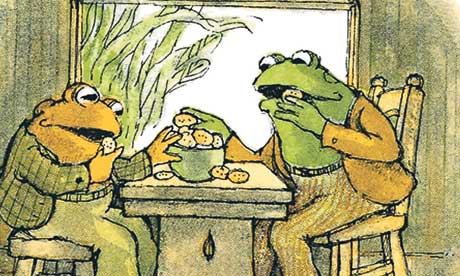 One of my favorite stories to read my daughter at bedtime is from The Adventures of Frog and Toad. In the story, Toad bakes a batch of cookies. He and Frog discover that they cannot stop eating the cookies because they are too delicious. They begin to devise ways to prevent themselves from eating the cookies by making it more difficult to give in to temptation. Frog called it: “Building up willpower.” They quickly discovered that if they wanted to eat the cookies badly enough they would find a way around obstacles. Eventually, Frog throws away all the cookies and proclaims: “we have lots and lots of willpower.” To which Toad responds: “You may keep it all, Frog, I am going home now to bake a cake.” It’s a funny story with an interesting point. The problem wasn’t the cookies, the problem was that they wanted the cookies more than they wanted to not eat them. The book of James touches on this idea when it addresses the things that are in our lives that cause temptation. It’s easy to blame God for giving us such temptations. However, temptation starts in us and are a product of our fallenness. In Romans Paul describes how the sin living in us seizes upon the law of God as a standard to rebel against. Sin drives us to do things we hate. He describes sin and the ensuing temptation as powerful and ruling over our bodies. As a result of this powerful force within us, even if the things we want are not in front of us, if we want them badly enough, we will go looking for them. Mind you, it is not the case that desire itself is bad. Desire is natural. Desire for food, pleasure, leisure, security, relationships, being right, or anything else are simply a part of how people are designed. Desire becomes destructive when it loses all checks and begins to cause damage. It can be seen in decisions made simply based on a desire with no concern for inevitable consequences and what is right or wrong. A common example is carelessly spoken words that are regretted the moment they are spoken. Other examples include extramarital affairs, the seemingly iron grip that pornography seems to have over the lives of many men, addictions, eating disorders, spending problems, etc. These typically involve normally healthy desires that become distorted and get out of control. James describes this as being dragged away by our own lusts. Ultimately, it’s important to recognize that the source of the problem is within us.
 Patching Cracks