
A few years ago, while taking a seminary class on Marriage Counseling, I realized that my performance as a husband left much to be desired. I wasn’t the worst husband in the world and, in fact, had become a better husband than I was early in our marriage. Instead of being terrible, I was just ok. That was not ok by me. I love my wife and want my life to be a blessing to her. I want her to make her life better through everything I do. This began my concerted effort to become the man my wife deserves and that God calls me to be. I approached this task in the same manner I approach every challenge and task in life. I’ve read everything I could find and experimented with implementing what I read. The following books are by no means exhaustive, but they are the ones that have influenced me more than any others. I’ve read most of them multiple times.
- You and Me Forever– This book is one of the best marriage books I’ve read. Francis Chan sets his discussion of marriage in the context of the larger gospel message. He addresses the major areas of the marital relationship in light of eternity. This book is fairly unique among the other marriage books I’ve read because of the broad overview focus. It is powerful because it puts the various elements of marriage in context. The struggles, responsibilities, and worries of marriage lose much of their weight and take on new meaning in light of the fact that your family will spend eternity with God. Marriage is part of the preparation God gives us for that experience. For me, this book set a whole different context for marriage and prompted me to strive to be a better husband as a central responsibility of my life and as as a follower of Jesus. In many ways, this book prompted me to be a better man.
- Sacred Marriage– Gary Thomas’ book is not entirely dissimilar from Chan’s You and Me Forever. It looks at marriage in terms of its role as preparation for eternity. Thomas’ treatment of the topic is more in depth and considers both the positive components as well as the difficulties faced in marriage. Thomas’ assumption that marriage is a means of developing a more intimate relationship with Jesus is profound and serves as a great foundation for spiritual growth. In relation to my marriage, this book fleshed out my understanding of how my marriage deepens my relationship with Christ. It gave me a whole other reason to strive to be a better husband as well as some context for understanding different aspects of my relationship with my wife.
- Love and Respect– Love and Respect is a break from the previous titles on this list. It is far more practical in focus, dealing with the idea that many of the challenges that crop up between husbands and wives are rooted in very different personality types and ways of interacting with the world. The premise is that men need to feel respected by their wives and wives need to feel loved by their husbands. This is not to say that husbands don’t want to be loved and wives don’t want to be respected. Rather, the author argues that they are less important than the alternative. The implications of these needs are expounded on for practical concerns. This book helped me understand my wife’s point of view and offered a great deal of understanding as to why some of my actions/words upset her, which had previously perplexed me. Eggerichs is also a gifted speaker. His seminars are worth watching and very entertaining. He also does a podcast that is excellent.
- His Needs Her Needs– Harley’s two books on this list are very practical, which I love. He looks at the affection/love feelings couples have in the beginning of marriage and examines why they tend to dissipate as time goes on. He argues that the feelings are a product of having emotional needs met by your spouse. The book explores the various important emotional needs of husbands and wives. This volume was powerful for me because it gave me areas of focus for my energies in serving and loving my wife. In addition, the illustration Harley uses to explain the importance of meeting needs, the love bank, has served to well in my own motivation and in counseling/teaching others.
- Love Busters– I actually think that this book was more influential for me than Harley’s other book (His Needs Her Needs), but it is more focused on the negative behaviors that damage the relationship. I was shocked at how many of the behaviors I engaged in and how they affected my relationship with my wife. In conjunction with the various love busters behaviors, Harley offers a list of policies to implement in the relationship that help avoid the love busters and that ultimately feed into the more effective implementation of the lessons from His Needs Her Needs. My wife and I agreed on one element of these two books that we did not like. Harley uses scaling questions, which are common in counseling, but we found terribly difficult to deal with. Otherwise, these two volumes are exceptional.
 This week’s sermon is the first in the summer series on the book of Judges. The audio did not pick up the first two minutes of the message… here is the basic introduction:
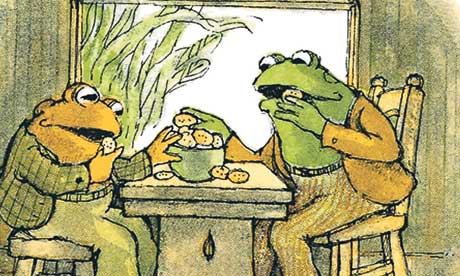 One of my favorite stories to read my daughter at bedtime is from The Adventures of Frog and Toad. In the story, Toad bakes a batch of cookies. He and Frog discover that they cannot stop eating the cookies because they are too delicious. They begin to devise ways to prevent themselves from eating the cookies by making it more difficult to give in to temptation. Frog called it: “Building up willpower.” They quickly discovered that if they wanted to eat the cookies badly enough they would find a way around obstacles. Eventually, Frog throws away all the cookies and proclaims: “we have lots and lots of willpower.” To which Toad responds: “You may keep it all, Frog, I am going home now to bake a cake.” It’s a funny story with an interesting point. The problem wasn’t the cookies, the problem was that they wanted the cookies more than they wanted to not eat them. The book of James touches on this idea when it addresses the things that are in our lives that cause temptation. It’s easy to blame God for giving us such temptations. However, temptation starts in us and are a product of our fallenness. In Romans Paul describes how the sin living in us seizes upon the law of God as a standard to rebel against. Sin drives us to do things we hate. He describes sin and the ensuing temptation as powerful and ruling over our bodies. As a result of this powerful force within us, even if the things we want are not in front of us, if we want them badly enough, we will go looking for them. Mind you, it is not the case that desire itself is bad. Desire is natural. Desire for food, pleasure, leisure, security, relationships, being right, or anything else are simply a part of how people are designed. Desire becomes destructive when it loses all checks and begins to cause damage. It can be seen in decisions made simply based on a desire with no concern for inevitable consequences and what is right or wrong. A common example is carelessly spoken words that are regretted the moment they are spoken. Other examples include extramarital affairs, the seemingly iron grip that pornography seems to have over the lives of many men, addictions, eating disorders, spending problems, etc. These typically involve normally healthy desires that become distorted and get out of control. James describes this as being dragged away by our own lusts. Ultimately, it’s important to recognize that the source of the problem is within us.

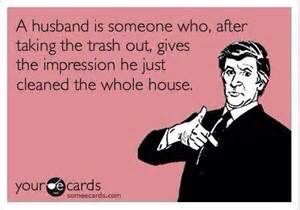 We think it’s a bigger favor than it actually is. There are some things we do that seem like a big deal to us. These are things that she sees as something we should have been doing all along or something that isn’t that important to her. It makes more sense to understand what she is impressed by, wants you to do, or would be meaningful to her, and then do those things. It’s easy to figure out what to do. Just watching what she reacts to or just asking her will tell you most of what you need to know. Also, a single nice act is one thing and will likely be something she appreciates. However, a real impact can be made by putting effort into doing things for her regularly. There is a cumulative effect. A thousand small acts of service, performed over the course of months, will mean more than one huge one standing on its own.
 We do it half-heartedly. Do the things you do for her as best you can do them. If you can, do them without her asking. Definitely do them without her having to nag you. Your effort and you thinking about her is what makes your actions meaningful. Don’t do a bad job and don’t procrastinate.
 “As the man of the house, God put me in charge, so my wife has to obey my direction… or else she is sinning against God.” This silly line has been used time and again to justify all manner of sinful behavior, mistreatment of women, tyrannical rule in the home, and in itself has the potential to be a blasphemous statement. In fact, much of the anger that is raised the idea of men leading in the home or church is rooted in the wicked mistreatment of families using this idea as an excuse. I’ve spent the last 4 years trying to figure out how to be a Godly husband. (This is not a humble brag because I’ve actually been married for almost 18 years. Better late than never.) The biggest struggle I’ve encountered in the process has been related to the matter of headship in the home. I suspect that the struggle I am experiencing is a good thing. Not struggling with it could rise from an overly simple or self-serving understanding of the concept. It is far better to wrestle with this idea and approach the matter with fear and trembling. The understanding I have reached thus far is far from the “Woman! Get me a sandwich!” mentality that’s often the default perspective.

 Last year, I read Theodore Rex, a biography of Teddy Roosevelt. Amongst the many things that stood out to me in the life of that great man was that he took his children camping almost every night while staying at his vacation home. This was a man who was the leader of the free world, a world class intellectual, and a war hero. He was not too busy or too important to sleep under the stars with his children. I am willing to wager that for all the great things that Teddy was, his kids valued that time spent with him more than anything else. As dads, we often get distracted by our work, our hobbies, and our comforts; all to the detriment of the time we spend with our kids. Putting forth the effort to create special times with them is important. It is when the real impact of our parenting will blossom. Camping is a unique way to do this, because it takes us out of our comfort zone and away from our distraction, forcing us to pay attention to each other. For a child, camping with dad is a great adventure and a privilege. Here are a few of the things I have learned from camping with my kids.
 Plan time together. The first big camping trip I took my daughter on in the mountains included fishing. She had seen fishing in cartoons and assumed it would be a very different experience. I am confident that she did not love it. She is too impatient. However, she loved sitting in my lap, eating snacks, talking, and reeling in the only fish we managed to catch, which she was terrified of when we finally got it to shore. The time we spent together was the big part. Eventually, I will teach my kids how to pick a campsite, build a fire, cook outdoors, etc. Those activities will be great because it will involve time together. For children, the time you spend focused on them is more valuable than anything else.
 Patching Cracks