Tag Archives: Jesus

Masculinity That’s More Than Just An Image


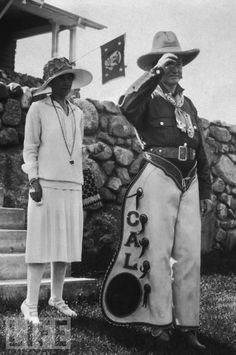
While reading an article on masculine identity recently, I was treated to a fascinating comparison of two presidents: Theadore Roosevelt and Calvin Coolidge. President Theadore Roosevelt was a genuine cowboy. He was a Rough Rider that charged up San Juan Hill and a rancher in the Dakotas. Through and through, he embodied a sort of genuine masculinity in everything from his hobbies, relationships, parenting style, intellectual pursuits, and approach to leadership. He lived during a time when the nation was wild and untamed, and the masculine ideal in western civilization was also still largely wild and untamed. 3 decades after Teddy’s years in office, Calvin Coolidge was president during a time when the culture yearned for a return to the masculinity of yesteryear, which led to a nostalgic revival of cowboys and western lore. The problem was that it wasn’t real. Attached is a picture of Teddy the cowboy and Calvin the cowboy. One of these things is not like the other. The image of masculinity is not actual manliness. Regardless of how well-dressed Calvin was, he wasn’t a cowboy. Similar phenomena can be seen today as men try to look the part, talk the part, and act the part – without ever actually fitting the part. The ideal of manliness has grown indistinct and young men carry with them a sort of insecurity about their identity as men. This is the crisis of modern man.


The Bible offers a clear picture of what God intended men to look, act, and be like. Paul tells us that Jesus is the full stature of mature masculinity. He was selfless, quick to action, principled, wise, a servant, loving, and courageous. In Christ, men are given an objective to aim for. The biggest problem we encounter with this definition is that it’s too big. I recently read a series of articles on how the ideal women of Proverbs 31 is terrible and demoralizing because it is perfection beyond attaining, sorta like trying to match the airbrushed beauty of a Cosmo cover girl. The same can be true for men. We are called to aspire to be like the son of God, the perfect man. The task seems almost too great, like attempting to swallow the sea in one gulp. However, we are given a few things that help us in that process. First, in Christ’s atoning sacrifice, we can find new life, freely given, that makes us new. We are new men if we are in Christ. Beyond being new creations, we are given the Holy Spirit who reshapes us. We are in the constant process of being remade as we follow Jesus. God helps us become new. A final major gift that God gives us in the process of becoming men like Jesus is in His word. Jesus not only offers us his perfect example, he also gives us his teachings through the scriptures. God’s word gives us simple, easy teachings and directions. I don’t care for reading the instructions when taking on new things, but this is worth the effort. 

The first simple list I think is worth considering as a man pursuing a life like Jesus’ is found at the end of Paul’s letter to the church in Corinth. Paul spends most of the letter answering questions that he had received in a letter from the church. He ends the letter with a set of instructions on various issues. Sandwiched between two paragraphs regarding mutual friends is 2 verses of instruction: 

Be watchful, stand firm in the faith, act like men, be strong. Let all that you do be done in love. 1 Corinthians 16:13-14

This short list reflects the basic task of Christian men in the basic work of being men like Jesus. Though the list is short, it takes place at the end of a long letter and is a reflection of the larger content of the letter. In the coming days, I’ll unpack each of these simple directions:

  1. Be watchful
  2. Stand firm in the faith
  3. Act like men
  4. Be strong
  5. Let all that you do be done in love.

This is by no means the only set of instructions given in the scriptures. However, it is a good place to start because it is all encompassing. 

Tagged , , , , , , , , , ,

Growing Up To Be Like Jesus 10/3/15


I’m not an athlete. In high school, I lettered in competitive public speaking. As a kid, my idea of a workout was changing extra channels on the remote. I was marathon watching television shows before Netflix marathons were invented. All of my years of non-athleticism culminated in a glorious moment when I stood in the path of Dave during a pickup football game behind the library one afternoon in college. Dave had been named the hardest hitting football player in the state of Michigan before coming to the small private college where we were playing ball. Dave took the ball and ran right up the middle. I planted my feet and stared Dave down as he charged at me. Several moments later I was on my back and Dave was somewhere downfield. I had pretty much no chance of stopping him because he was fit, strong, and an experienced football player. I wasn’t any of those things. There’s an important lesson here. I wasn’t prepared to stop Dave. Had I done the work to grow in stature and prepared for the momen,t I would certainly have done a better job of standing firm in the moment. As Alexander Graham Bell once said: “Before anything else, preparation is the key to success.” 

Of course, this sports moment doesn’t matter much. However, the lesson behind the experience is worth learning. In his letter to the church in Ephesus, Paul describes the various gifts that believers receive from the Spirit in order to mature and prepare the church to stand firm in the faith. He explains that the various leadership roles, like pastors, teachers, and evangelists, are there to train the church. At its core, training the church involves training individuals to help them grow to spiritual maturity. The church and God’s people are to constantly train and grow to become solid and mature. When difficulty, temptation, persecution, hardship, or anything else come at us, we are to be prepared to plant our feet and stand our ground. This is the product of spiritual maturity. Which begs the question: What does this spiritual maturity look like? Paul answers the question in 4:13: 

…till we all attain unto the unity of the faith, and of the knowledge of the Son of God, unto a full-grown man, unto the measure of the stature of the fulness of Christ… 

Simply put, the church grows in its resemblance to and imitation of Christ. This is the goal. Jesus is the ultimate man, who all men should aim to resemble in their lives and lifestyles. His life and teachings are the model we’re to imitate. The job of teachers, preachers, and leaders is to help the people of God grow to be like Jesus by discipling them. 

Paul goes on to explain that once this discipleship is completed: 

…we may be no longer children, tossed to and fro and carried about with every wind of doctrine, by the sleight of men, in craftiness, after the wiles of error; but speaking truth in love, may grow up in all things into him, who is the head, even Christ… (4:14-15)

Paul’s letter focuses on causes of division and the need for believers to live righteously before God. For men, this means that living out our masculinity means becoming the kind of man who shows Jesus to others through his words and actions. Men should aim to act and speak like Jesus. They should be firm in doing so, not stumbling or inconsistent. This is no small task and cannot be accomplished alone. It requires that men who desire to grow to be like Christ to enter into the task of discipleship, or rather, training for Christ-like living. It is a daily, conscious effort to grow. 

Tagged , , , , , , , ,

Acting Like Men, Dreaming Like Boys

The following is my newspaper column from this week. I do not normally post material I have published in other media (at least not without significant rewriting!). This seems like it was worth sharing. Let me know what you think. It appeared in the Big Sandy Mountaineer 9/30/15.

IMG_8051My 2-year old boy has a cold and was very cranky this morning. My wife and I tried all sorts of things to soothe him with little success until I pulled out a box of Star Wars toys and settled on the kitchen floor to play with him.

He wasn’t content to play with me in any other setting or with any other toys, but the Star Wars toys captured his attention. Within a few minutes my fussy toddler was flying his space ship around the kitchen, making laser noises and and giggling. He sort of knows which toys are the “good guys” and which are the “bad guys.” I generally pick the villains to play with, because that’s what my dad did, and he always wants to play with the heroes. I won’t pretend to know why my boy decided that would cheer him up, but there is something worth paying attention to in the pattern, which I’d argue is largely true of males in general.

Boys usually crave adventure toys, action, excitement, and they idolize heroic figures. Some of this is likely cultural, but I’d argue that in the hearts of men there tends to be a desire for action, an inclination to aim toward greatness, and a tendency to be inspired by noble things. These tendencies certainly shift and change as they age and develop their own values and interests. However, regardless of what form these desires take in the long run, they begin with a desire to be the hero, to be the best at whatever it is that they are pursuing, and an inclination to dream big dreams. As they age, boys tend to put these inclinations away in favor of more practical and realistic goals. This is natural and normal phenomena. Few men go to work everyday dreaming of being a hero. However, whether or not it is natural and normal, there is a sense in which it isn’t ideal. It is far better when a man realizes that their inclinations ought to be adopted to fit the lives in which they live. As the father of small children, I get to play the part of the hero. This often wears off as time goes by and children grow up. However, there are men I have known who dedicate their lives to being great fathers. Those men often raise children who see them as heroes. The same can be said of a man who dedicates himself to being a great husband. It’s important to note that this is more than just being a friend or a good provider. It is being an example, defender, caretaker, leader, fixer, teacher, and all manner of other things. Further, men who pursue depth of character, integrity, and righteousness grow to a stature that causes folks to see them as heroes and great in their own right. I would argue that this is essentially what Christians refer to when they speak of following Christ’s example. Some of the most impressive men I know are those who try to live like Jesus. Their families, friends and neighbors recognize that they are different. Paul once wrote that when he became a man he put away childish things. The things that make men great are too easily deemed childish. Having a desire to pursue greatness in family and community life, then acting on that desire, is the beginning of achieving distinction.

Tagged , , , , , , , , , , , , , , , , ,

Real Men Treasure Their Mothers, Wives, Daughters, and All Women

IMG_7507-0This blog post started out as a brief comment on an article from Mental Floss that I was sharing on my Facebook page. It slowly evolved into a rant. I decided it was an important enough idea to share publicly. The link is a collection of advertisements from 70 plus years ago that use overt shaming of women in order to convince them to buy products. The gist of most of these ads is simple: you are not pretty or hygienic enough for a man to love you. The article points out how ridiculous and offensive this approach to advertising is. Click the link to read it in depth. It’s an interesting read and Mental Floss is a pretty awesome website.

selling-shame-40-outrageous-vintage-ads-any-woman-would-find-offensive

In particular, the novelty of the ads featured in the article is interesting, but the most fascinating part is the explanation about how advertising set out to make women feel inferior in order to sell them products. Advertising has changed a great deal in the sense that it has gotten more subtle and sophisticated, but it hasn’t changed that much in how it devalues women in order to convince them to consume products. It seems like most television and advertising has geared itself toward a select few messages, most of which can be boiled down to: “You’re not happy” or “you’re not adequate.” There are variations of these messages, including: “your family isn’t happy, but they could be if you use our product.” The vintage ads in the article are offensive, but they sell with the same message as most Cosmo covers and weight loss products. “You aren’t as good as our model, but you could be.” There’s a terrible trick built into the whole scheme as well. Which is that it’s a shell game. You chase the elusive prize, but even when you find it, you don’t. If you reach the “ideal” standard, the ads will keep telling you “you’re not happy” or “not good enough.” These advertisements and messages are everywhere, telling our wives and daughters to question themselves and telling young men that these are the standards of beauty that they should lust after.

The truth is that physical attractiveness is far from the most important quality for a woman to possess. Proverbs tells us: Charm is deceptive, and beauty is fleeting; but a woman who fears the LORD is to be praised. Beauty is important in some ways and men tend to be very visual by nature looking for beauty and attractiveness as a part of who they are. These are a part of reality, that we shouldn’t shame or decry, but to worship a standard of physical attractiveness that is unattainable and manufactured is wrong. It is even more wrong to shame women for not perfectly emulating it. God designed us for better than this. Men, in particular, need to lead the way in telling their wives, sisters, and daughters the truth about their value and worth as God’s creatures. Sometimes, my 4-year old daughter gushes about how she will be prettier and everyone will like her if she wears the right dress or has the right hairstyle. I do my best to correct this every time, telling her that I love her because she is herself and because God made her wonderful. The women in our lives are not to be cherished because of their beauty, though my wife and daughter are beautiful. They are worth cherishing because God blessed me with funny, clever, caring, awesome women that make my life better. I learn to love God more and be more like Jesus because of my wife and daughter. It’s hard to love my wife like Christ loved the church. It’s easy to forget that Eve was created as a perfect counterpart to Adam, to be cherished and valued as a gift. We need to do the same. It drives me crazy to think that my wife and/or daughter would ever think they are anything less than a treasure. I am amazed at how my wife becomes more beautiful every day and my daughter looks more like her all the time. I am even more amazed that them being so pretty is the least of their great attributes. Loving, respecting, honoring, and cherishing women is a blessing and a responsibility that all Godly men ought to embrace.

***Edited after posting to clarify a few ideas and fix a few awkwardly phrased sentences.***

Tagged , , , , , , , , , , , , , , , , , , ,

Arthur Pink on Manhood and Jesus

Arthur Pink on Manhood and Jesus from his book "the Nature of God"

Arthur Pink on Manhood and Jesus from his book “the Nature of God”

Tagged , , , , , , , , ,

Falling “Christian” Stars: Josh Duggar and the Cult of Christian Celebrity

IMG_7424With the recent release of hacker data stolen from Ashley Madison, a dating service for married people seeking to have an affair, and the revelations that followed; various tendencies in Christians’ responses have, yet again, sprung forth. Every time a minister or other prominent Christian is caught in some sort of malfeasance, certain responses are predictable. Perhaps the most troubling to me is the tendency to minimize or ignore sin. Jesus and the rest of the Bible tend to treat sin seriously. This is even the case for the “good guys” in the Bible. David, a man after God’s own heart, took it on the chin for his adultery and murder. Peter was called “Satan” in the rebuke of Jesus when he spoke out of his own interests. Paul repeatedly bemoans his own sin, calling himself the least of the disciples and repeatedly referring to his persecution of the church decades after it happened.
In broaching this topic, it’s important to acknowledge a hard truth in our culture: Western civilization likes to idolize people. Politicians, musicians, actors, directors, writers, activists, preachers, teachers, and whatever the Kardashians are (That last one didn’t trigger my spell checker… just take a moment to let that sink in!). We tend to look to these folks as infallible heroes. The problem that comes with trying to make anyone into a messiah is that they can’t save us, and they’re only human. There shouldn’t be any such thing as a celebrity Christian. This is not to say that folks of faith shouldn’t be in the public square and that we shouldn’t support them. Rather, we need to recognize that these folks are not God and shouldn’t be idolized. They’re fellow servants of our Master. When we worship anyone or anything that isn’t Jesus, we commit idolatry.
Some folks might object to my characterization of idolizing celebrities. To those folks I’d say: If you’ve spent more money on, quoted more, given more attention to, obeyed more faithfully,  talked about more often, or pointed others toward anyone or anything more than Jesus, it is an idol. I see this especially with celebrity pastors. For example, lots of folks quote one best selling mega-church pastor or another more often than he or they actually quote scripture. Worse still, it’s seldom acknowledge that many of them are preaching things that aren’t in harmony with the gospel. Rather, fans tend to treat their teachings as though they are the gospel themselves. We are often slow to compare sermons and books to the Bible ourselves because the light of truth exposes falsehoods.
There’s a handful of reasons that it’s easy to latch on to idols. For starters, we are fallen creatures. We rebel against God by nature. Worshipping an idol is a matter of the sinful heart, which will always tend to love the creation more than the Creator. Further, our culture is geared toward this sort of idolizing of men. It’s on our TVs, magazines, books, billboards, conversations around the water cooler, etc. It’s just there and it’s easy to fall in line with it.
The problem that will typically arise with idolizing men is what we see happening to Josh Duggar and have seen with countless folks before him. They turn out to not be God, and as a result, they will stumble or fail to be everything that God is. We will eventually wind up defending, ignoring, minimizing, whitewashing, or pointing fingers at the sins of others all in an effort to draw attention away from the reality that the thing/person we idolize isn’t sufficient to save or worthy of praise. Otherwise, we are forced to disown and destroy our idol. In short, we shoot our wounded. We’ve seen these reactions in the folks who tried to defend Duggar or ignore his failings, as well as those who tossed him under the bus when it turned out that he’s a sinner, too.
The solution is for believers to come to a point that we recognize that God is deserving of our worship and adoration in a way that no one else is. We must remind ourselves of this daily. When His people who live in the spotlight of public scrutiny fall short, we need to acknowledge sin for what it is and point to Christ. Further, we need to hold ourselves and each other to a higher standard than we hold the world.
Tagged , , , , , , , , , , , , , ,

What Does It Mean to Be A Real Man?

IMG_7389“Next week, if you guys would like, we will start a teaching series on ‘what does it mean to be a man?’” I was pretty surprised by the response this statement garnered amongst the young men in the room. I was teaching Bible to a group of clients at a drug treatment program. The boys were largely placed by the local jail, most were from bad neighborhoods and broken homes. There were lots of kids with gang affiliations and long criminal histories. The biggest challenge in teaching them anything was finding things they would engage with at all. In this case, the young men who were present responded enthusiastically. Many of them approached me later, individually, to express their excitement about learning how to be a real man. I was initially perplexed by the response, largely because the young men routinely and loudly proclaimed their manliness. It was common to hear them yell and carry on about how tough they were. I often joked that it was like watching an episode of wild kingdom, with the young male lions strutting and posing in an effort to intimidate each other. The crazy secret behind the whole display was that most of the young men had no idea at all about what it meant to be a real man. They just figured that if they faked it loudly enough everyone would buy their act. Boys learn how to be men by watching their dads. This is the way God designed the world. If fathers are flawed, their children learn to be flawed men. This is one of the reasons why alcoholic men tend to raise alcoholic men and why the Bible says that sons are punished for their father’s sins for generations to follow. In the case of the boys in the program, because none of them had a dad to watch and emulate, they were left with what they could piece together from pop culture and their peers. The challenge with that is that boys compete with each other naturally. This meant that the fatherless boys tried to be men by being tougher than the other guy. The end result was emptiness. If a man tries to find his manhood in violence, sex, work, wealth, or anything else in the world that is temporary and fleeting, they will simply end up emptier. Solomon said that wealth, sex, work, and everything else is just a vapor. It passes and disappears as though it was never there in the first place.

atlasThe topic of manhood is complicated and will take more than one post to properly explore. In the short term, it’s important to establish a basic concept of manhood from which to work. I’d suggest that the place to start is with the source of manhood identity that is built into our world: Boys learn to be men by watching their fathers. This is because parents stand in God’s place in the lives of their children for the first several years of their lives. They provide life, food, shelter, moral guidance, correction, etc. Children’s conception of God is often shaped by their perception of their dads. Genesis tells us that when God created man, He created them in His own image. Fathers (and all men for that matter) are supposed to be copies of God in many respects. We are to share His heart, passions, loves, understanding of family, and work. When dads fail to model this lifestyle and teach their boys to do the same, they create problems. Fortunately, God provides us a more clarified example of manhood in the person of Jesus, who is God made flesh. A boy without a good fatherly model to follow can see ideal manhood in Jesus. When we choose to follow Jesus, our job is to learn to be like him through a lifetime of training, which is discipleship. This is why Christ’s self-sacrificing love and attitude of humble service is the example for husbands. He demonstrates the ideal manner of intimate relationship through his relationship with the church.

overly-manly-man-ansd-steakIt’s easy to picture Jesus as a pollyanna-type figure or as the feathered haired guy in a bathrobe that we all encountered on flannel graphs in Sunday School as kids. Fortunately, the tame version of the Son of God is far from accurate. C.S. Lewis captured Jesus’ identity best when he wrote: “He’s not safe! But, he’s good.” Jesus’ integrity, passion, penchant for action, grace, wisdom, willingness to speak openly (even offensively if necessary), self-sacrificing service, and lifetime focus on making the world better are just a few of the qualities that make Jesus is the ideal standard of manhood. He is the ideal mold from which men were meant to be cast. It is from Him that we learn how God desires us to be. Once we know, our job is to enter training to become like him.

Tagged , , , , , , , , , , , , , , , , , , , , ,

W. Frank Scott on Jesus in Marriage

This is a longer quote from Scott’s preaching commentary on the gospel of John. There’s enough good stuff here that it’s worth doing the whole quote… though you don’t get the fortune cookie effect that comes with a shorter quote. inviting Jesus to the wedding

Tagged , , , , , , , , , , , , , , , ,

Alcoholics Anonymous and Discipleship

Alcoholics Anonymous and DiscipleshipThrough my work as a chaplain and as an addiction counselor, I’ve learned a great deal about and from Alcoholics Anonymous. It’s often said that AA is simple: Go to meetings, find a sponsor, and work the 12 Steps. The challenge that many folks face when they start going to AA meetings is that they don’t want to get a sponsor or work the steps. Alcoholics often struggle with interpersonal relationships and authority, which makes finding someone to have an honest relationship of accountability with daunting. It’s not uncommon for alcoholics to try to go it alone for long periods of time without ever reading the AA Big Book or working the steps before finally breaking down and finding a sponsor. The most common reason alcoholics eventually enter a relationship with a sponsor and work the steps is that they recognize that their drinking and destructive patterns will destroy everything in their lives if they don’t overcome it. Desperation to escape slow death at their own hands drives them to reach out to another recovering alcoholic to get help in achieving lasting sobriety. Working with someone else, who has overcome similar struggles, works. They understand each other based on shared experience and are able to point each other toward spiritual growth, which is the most important component of the AA approach to recovery.

As a pastor, I’ve long been aware of the Biblical roots of the AA approach to recovery. The alcoholic acknowledges that they can no longer control their lives, turn control of their lives over to God (who is more powerful and able to control their lives), they then confess their past moral failings and seek to make amends with those they’ve wronged. This is essentially the Biblical path to salvation: acknowledge that we are sinners, turn our lives over to Jesus, confess our sins after a fearless moral inventory, then do our best to make it right, while continually striving to overcome our sins. Sponsorship is discipleship. Discipleship is when a believer finds someone- a more mature believer to help them train, grow spiritually, and overcome sin in their efforts to be imitate Jesus. The unfortunate reality is that despite the fact that AA sponsorship is an imitation of Christian discipleship, it is far more common in AA groups that discipleship is in churches. Christians just don’t look for relationships of accountability and spiritual training in an effort to grow in Christ and overcome sin. The desire to overcome moral failings isn’t present in churches in the same way that it is present in AA. This is despite the fact that discipleship is the basic method of spiritual growth and training presented in the Bible. It is how Jesus grew believers and how the church grew disciples for centuries.

IMG_0269-0

Click to Read Previous PatchingCracks Post: Skipping Workouts and Discipleship Training

I’d suggest that the reason for the lack of discipleship in the modern western church is simple: we aren’t overly concerned with overcoming sin, growing in holiness, or imitating Christ. It’s important to enough to many believers that they might read a few books a year and attend church to listen to sermons, but this is often seen as “good enough.” Serious training to grow spiritually just isn’t often yearned after amongst believers. This is the same reason that there are around 4.4 Bibles for every household in the U.S., but only around 26% of the folks who own Bibles and identify them as important, read them. The folks working the steps in Alcoholics Anonymous see their addiction as a death sentence, so they find folks to disciple them in their spiritual growth as a means of escape. It is far too common for Christians to see overcoming their sins as an optional add-on to the faith or something they ought to do in the same sense as they ought to floss and lose weight. They do not see sin as a road to death or as utterly offensive to God. This general disinterest with overcoming sin is reflected in the literature the church consumes en masse, which tends to focus on how to be happier or more wealthy. Books dealing with imitating Jesus and obeying his commands are far less common and seldom approach the Christian best sellers list. It is often the case that when we preach/write about sin, it is focused on “wicked” groups outside of the body of Christ, rather than on our own failings. The church is content to point to the sawdust in the eyes of others, while ignoring the log obscuring our vision. We are pleased with Jesus as Savior, but uninterested in Him as Lord. Until following Jesus becomes the burning desire and priority in our lives, the church will continue to neglect discipleship. We must learn to detest our own sins and see overcoming them as escaping from death.

Tagged , , , , , , , , , , , , , , , ,

Sermon Link: From Rubble to Return

This week’s sermon on Nehemiah 10, dealing with the Jewish people’s community commitment to obey and submit to God’s law after returning from exile and restoring the walls of Jerusalem. The message looks at the Hebrews’ repentance, compares it to repentance in modern believers, and talks about how God provides restoration through faith in Jesus. 

Preached by Erik Sietsema at Big Sandy Community Church of God in Montana On 8/16/15. 

http://patchingcracks.sermon.net/main/main/20467287

Click the Image To Listen to the Message

Tagged , , , ,