Here is the link to my sermon last Sunday, part 12 in my effort to preach through Nehemiah.
Patching Cracks
Trying to Be Wise In God's Eyes

Tag Archives: Christianity
What Does It Mean to Be A Real Man?
 “Next week, if you guys would like, we will start a teaching series on ‘what does it mean to be a man?’” I was pretty surprised by the response this statement garnered amongst the young men in the room. I was teaching Bible to a group of clients at a drug treatment program. The boys were largely placed by the local jail, most were from bad neighborhoods and broken homes. There were lots of kids with gang affiliations and long criminal histories. The biggest challenge in teaching them anything was finding things they would engage with at all. In this case, the young men who were present responded enthusiastically. Many of them approached me later, individually, to express their excitement about learning how to be a real man. I was initially perplexed by the response, largely because the young men routinely and loudly proclaimed their manliness. It was common to hear them yell and carry on about how tough they were. I often joked that it was like watching an episode of wild kingdom, with the young male lions strutting and posing in an effort to intimidate each other. The crazy secret behind the whole display was that most of the young men had no idea at all about what it meant to be a real man. They just figured that if they faked it loudly enough everyone would buy their act. Boys learn how to be men by watching their dads. This is the way God designed the world. If fathers are flawed, their children learn to be flawed men. This is one of the reasons why alcoholic men tend to raise alcoholic men and why the Bible says that sons are punished for their father’s sins for generations to follow. In the case of the boys in the program, because none of them had a dad to watch and emulate, they were left with what they could piece together from pop culture and their peers. The challenge with that is that boys compete with each other naturally. This meant that the fatherless boys tried to be men by being tougher than the other guy. The end result was emptiness. If a man tries to find his manhood in violence, sex, work, wealth, or anything else in the world that is temporary and fleeting, they will simply end up emptier. Solomon said that wealth, sex, work, and everything else is just a vapor. It passes and disappears as though it was never there in the first place.
 The topic of manhood is complicated and will take more than one post to properly explore. In the short term, it’s important to establish a basic concept of manhood from which to work. I’d suggest that the place to start is with the source of manhood identity that is built into our world: Boys learn to be men by watching their fathers. This is because parents stand in God’s place in the lives of their children for the first several years of their lives. They provide life, food, shelter, moral guidance, correction, etc. Children’s conception of God is often shaped by their perception of their dads. Genesis tells us that when God created man, He created them in His own image. Fathers (and all men for that matter) are supposed to be copies of God in many respects. We are to share His heart, passions, loves, understanding of family, and work. When dads fail to model this lifestyle and teach their boys to do the same, they create problems. Fortunately, God provides us a more clarified example of manhood in the person of Jesus, who is God made flesh. A boy without a good fatherly model to follow can see ideal manhood in Jesus. When we choose to follow Jesus, our job is to learn to be like him through a lifetime of training, which is discipleship. This is why Christ’s self-sacrificing love and attitude of humble service is the example for husbands. He demonstrates the ideal manner of intimate relationship through his relationship with the church.
 It’s easy to picture Jesus as a pollyanna-type figure or as the feathered haired guy in a bathrobe that we all encountered on flannel graphs in Sunday School as kids. Fortunately, the tame version of the Son of God is far from accurate. C.S. Lewis captured Jesus’ identity best when he wrote: “He’s not safe! But, he’s good.” Jesus’ integrity, passion, penchant for action, grace, wisdom, willingness to speak openly (even offensively if necessary), self-sacrificing service, and lifetime focus on making the world better are just a few of the qualities that make Jesus is the ideal standard of manhood. He is the ideal mold from which men were meant to be cast. It is from Him that we learn how God desires us to be. Once we know, our job is to enter training to become like him.
W. Frank Scott on Jesus in Marriage
This is a longer quote from Scott’s preaching commentary on the gospel of John. There’s enough good stuff here that it’s worth doing the whole quote… though you don’t get the fortune cookie effect that comes with a shorter quote. 
Josh Duggar, Hidden Sin, and Why Christian Men Fall
 This week’s news has been dominated by the story of the Ashley Madison data dump. Hackers, who had stolen the account information of users of the Ashley Madison adultery dating service, released the information of hundreds of thousands of men and women who had signed up to find someone to cheat on their spouse with. The first name to pop up in the headlines was that of recently scandalized Christian marriage/morality crusader and former reality TV star, Josh Duggar. Social media, news outlets, and tabloid websites jumped at the opportunity to denounce the hypocritical actions of Duggar. In the last week, I’ve seen folks claim that all Christians are hypocrites, that Christians are the source of most social ills, that this is further proof that Christianity is a scam, folks have dismiss Duggar as a pervert, and all sorts of other vitriol. Folks who’d previously defended Duggar are conspicuously silent, many not knowing what to say after defending the man in past months. I believe that many Christians reach a point where they expect men to be sinless, instead of knowing that men can easily fall. We need to remember that Jesus is Jesus and we are not. No one is-except Jesus. I’m not trying to excuse the guy’s sins or dismiss him. Frankly, it’s not my job to deal with him. I’m neither his pastor nor his family. It’s unlikely he’ll ever read this. I will say that we need to acknowledge the seriousness of sin and judge ourselves by a higher standard than the world. We can’t wag a moralizing finger at the lost while whitewashing and excusing our own sins. It’s not right. Instead, we should take the opportunity to properly explain repentance and grace. More on that in a future post.
Personally, I’ve been watching the whole thing and feeling sorry for the man’s wife and kids, who will bear the public shame and humiliation of Josh’s actions. In addition, I’ve found myself thinking about how this happens. Whether or not ministers are statistically more likely to get caught cheating, it’s certainly news when it happens. As a guy who works in ministry, I pay attention whenever I hear about it because I’m genuinely bothered by it. For starters, it reflects badly on Jesus and His church. It also raises the specter of potential in my mind. Men that I like and respect have had these sorts of moral failings, so it follows that it could happen to me as well. I’ll admit that I’m very aware of the potential. I don’t think any of these guys planned to cheat on their wives or that they lived their whole lives as con artists, faking their faith in order to trap a wife and get a low paying pastor job. (Though, oddly enough I had a stranger accuse me of that once.) Rather, through observation, I’ve collected some common traits that make it easier for Christian men to fail morally.
- A sense of infallibility: I once interviewed at a church where the previous pastor had left when he ran off with a Sunday School teacher he had been cheating on his wife with. One thing that I learned about him during my visit was that he frequently spoke in sermons about being sinless. He literally claimed that he no longer committed sins. The problem with this mindset is that at the point where he began to experience temptation to commit adultery, whether he wanted to confess it or not, he couldn’t without acknowledging that he was, in fact, a sinner. I’ve talked to ministers who suffer with guilt and shame, wishing they could seek help, but feeling trapped because of their sense that they can never acknowledge any of their sins to anyone else. If a man gets trapped in a pattern of sin, one that he cannot deal with through confession and discipleship, it will generally get worse and worse until it’s exposed. I would argue that this is a result of a…
- Poor understanding of our need for Jesus: Jesus died for my sins and the sins of all people because we couldn’t live perfectly ourselves. When I sin, I confess it and turn in a different direction. God didn’t pick me because I’m awesome, or good, or smart, or anything else. I belong to Jesus because he recognized my wretchedness and saved me from it. He did this specifically so he could be glorified because of His tremendous grace and mercy. When I forget that I am a wretched man or try to depict something otherwise to the world, I forget or fail to understand my need for Jesus. That need should dominate my decisions and relationships. My preaching and teaching should openly acknowledge my wretchedness and need for Jesus. If I publicly acknowledge my sinfulness regularly, then I don’t need to hide it. From all appearances, Duggar was struggling with sexual sin from a fairly early age. He didn’t seek help in overcoming it, likely because of the shame associated with sins of that nature and because folks assume that we should instantly defeat temptation and be done. Proper emphasis of our need for Jesus and the folly of self righteousness would have created an environment where confession would have been easier. Freedom to speak about it keeps me from falling victim to…
- Weak accountability: Men who operate in a vacuum, with no oversight, can easily fall into sinful patterns because no one is watching. He begins to develop the sense that no one will ever catch him. Accountability, in the form of oversight from others and regular meetings, where the man is free to speak openly about his struggles, is vital to preserving morality. In particular, men need to be held accountable when they have…
- A marriage that isn’t top priority: It’s easy for marriage to fall lower on the priority list, behind work, children, image, success, etc. The only thing that ought to rank higher is my commitment to follow Jesus, which in turn governs my relationship with my wife. Specifically, husbands are to love their wives as Christ loved the church. When spouses fail to meet each others emotional needs, affairs become more likely. Imitating Christ in marriage means serving each other mutually, caring for each others needs. Willard Harley wrote 2 excellent books on the topic, Love Busters and His Needs, Her Needs. I’d highly recommend them both to any married couple. Disclaimer: This isn’t to blame the situation on wives. Each man’s sin is his own. It’s rather to point to a real factor that leads to affairs and offer a tool to ensure it never happens.
- Radical Honesty: There are several people in my life, including my wife, several pastors, and a few other men, with whom I practice radical honesty. I tell them every rotten thing I think or do. Sin grows in the dark. The more I hide, the more likely I am to fall into sin. Maintaining several relationships of radical honesty is vital to safeguarding integrity.
- Maintaining Good Boundaries: If I were a sleepwalker, I wouldn’t ever go camping at the top of the Grand Canyon. I’d be afraid of walking off a cliff while sleeping. I’m not a sleepwalker, but I am a sinner. I sometimes do sinful things in moments of colossal moral sleepwalking. Because of this, I do not do counseling with women in places where I cannot be interrupted. I don’t spend lots of time alone with women who aren’t my wife. I maintain strict rules about where I go and with whom. This keeps me from moments of stupidity.
Arthur Pink on How Christians Should Live
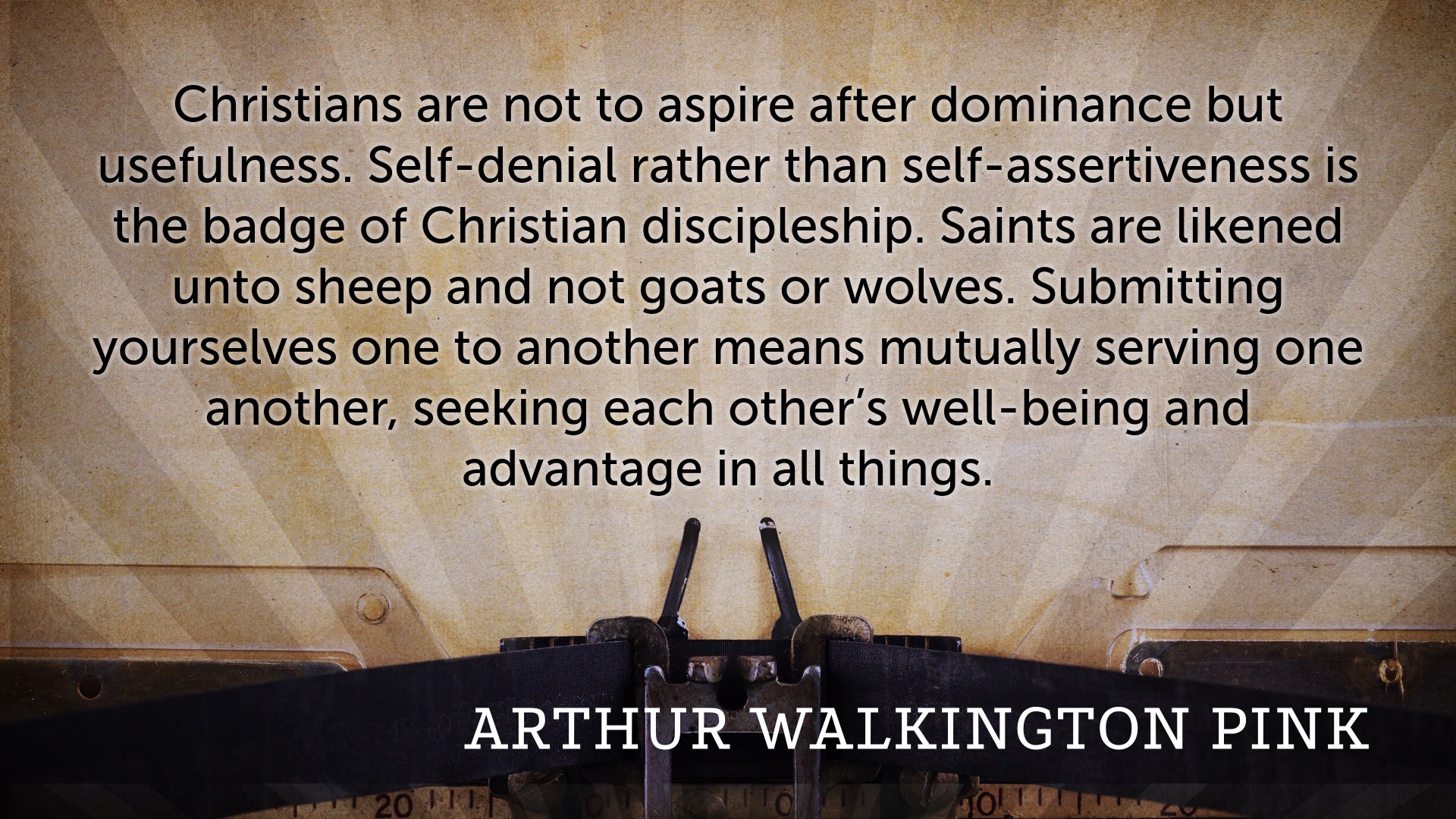
Arthur Pink on the Christian’s Life
Alcoholics Anonymous and Discipleship
 Through my work as a chaplain and as an addiction counselor, I’ve learned a great deal about and from Alcoholics Anonymous. It’s often said that AA is simple: Go to meetings, find a sponsor, and work the 12 Steps. The challenge that many folks face when they start going to AA meetings is that they don’t want to get a sponsor or work the steps. Alcoholics often struggle with interpersonal relationships and authority, which makes finding someone to have an honest relationship of accountability with daunting. It’s not uncommon for alcoholics to try to go it alone for long periods of time without ever reading the AA Big Book or working the steps before finally breaking down and finding a sponsor. The most common reason alcoholics eventually enter a relationship with a sponsor and work the steps is that they recognize that their drinking and destructive patterns will destroy everything in their lives if they don’t overcome it. Desperation to escape slow death at their own hands drives them to reach out to another recovering alcoholic to get help in achieving lasting sobriety. Working with someone else, who has overcome similar struggles, works. They understand each other based on shared experience and are able to point each other toward spiritual growth, which is the most important component of the AA approach to recovery.
As a pastor, I’ve long been aware of the Biblical roots of the AA approach to recovery. The alcoholic acknowledges that they can no longer control their lives, turn control of their lives over to God (who is more powerful and able to control their lives), they then confess their past moral failings and seek to make amends with those they’ve wronged. This is essentially the Biblical path to salvation: acknowledge that we are sinners, turn our lives over to Jesus, confess our sins after a fearless moral inventory, then do our best to make it right, while continually striving to overcome our sins. Sponsorship is discipleship. Discipleship is when a believer finds someone- a more mature believer to help them train, grow spiritually, and overcome sin in their efforts to be imitate Jesus. The unfortunate reality is that despite the fact that AA sponsorship is an imitation of Christian discipleship, it is far more common in AA groups that discipleship is in churches. Christians just don’t look for relationships of accountability and spiritual training in an effort to grow in Christ and overcome sin. The desire to overcome moral failings isn’t present in churches in the same way that it is present in AA. This is despite the fact that discipleship is the basic method of spiritual growth and training presented in the Bible. It is how Jesus grew believers and how the church grew disciples for centuries.

Click to Read Previous PatchingCracks Post: Skipping Workouts and Discipleship Training
I’d suggest that the reason for the lack of discipleship in the modern western church is simple: we aren’t overly concerned with overcoming sin, growing in holiness, or imitating Christ. It’s important to enough to many believers that they might read a few books a year and attend church to listen to sermons, but this is often seen as “good enough.” Serious training to grow spiritually just isn’t often yearned after amongst believers. This is the same reason that there are around 4.4 Bibles for every household in the U.S., but only around 26% of the folks who own Bibles and identify them as important, read them. The folks working the steps in Alcoholics Anonymous see their addiction as a death sentence, so they find folks to disciple them in their spiritual growth as a means of escape. It is far too common for Christians to see overcoming their sins as an optional add-on to the faith or something they ought to do in the same sense as they ought to floss and lose weight. They do not see sin as a road to death or as utterly offensive to God. This general disinterest with overcoming sin is reflected in the literature the church consumes en masse, which tends to focus on how to be happier or more wealthy. Books dealing with imitating Jesus and obeying his commands are far less common and seldom approach the Christian best sellers list. It is often the case that when we preach/write about sin, it is focused on “wicked” groups outside of the body of Christ, rather than on our own failings. The church is content to point to the sawdust in the eyes of others, while ignoring the log obscuring our vision. We are pleased with Jesus as Savior, but uninterested in Him as Lord. Until following Jesus becomes the burning desire and priority in our lives, the church will continue to neglect discipleship. We must learn to detest our own sins and see overcoming them as escaping from death.
Sermon Link: From Rubble to Return
This week’s sermon on Nehemiah 10, dealing with the Jewish people’s community commitment to obey and submit to God’s law after returning from exile and restoring the walls of Jerusalem. The message looks at the Hebrews’ repentance, compares it to repentance in modern believers, and talks about how God provides restoration through faith in Jesus.
Preached by Erik Sietsema at Big Sandy Community Church of God in Montana On 8/16/15.
http://patchingcracks.sermon.net/main/main/20467287

Click the Image To Listen to the Message
Skipping Workouts and Discipleship Training

A Patchingcracks Post
Lord: In the ancient world, if someone was your “lord” it meant that they were your master. You obeyed their will as your ultimate, totally authoritative boss. Paul is not overstating the concept in the least when he calls himself a slave to Christ. In this modern western world, this word conjures images of an abusive overseer, but this is not accurate to who Christ is. He is a loving, self-sacrificing master who lays down His life for His followers. He bids us to love Him and each other as He has loved us. Now, it’s important to recognize that loving is not synonymous with permissive. A loving parent doesn’t let their kids run wild. Rather, they discipline and teach their children, helping them to grow/mature into good people and prepare them for the rest of their life. The same is true of Christ, who leads us to become what God created us to be and prepares us to enjoy life with God. Jesus being our lord is a total life commitment, not an image or part time commitment.The Yoke of His Teachings: A yoke is a large piece of wood that lays across the neck of an ox or other beast of burden. The yoke transforms the effort of the oxen into work, by moving a plow, hauling a cart, or turning a millstone. Ancient students were said to take on the “yoke” of their teacher when they learned the teachings of their masters. Essentially, Jesus is calling us to take on His teachings, that turn our efforts into something valuable. That something valuable is our maturing into people who have hearts like Jesus’. It is also our good works that make our world look like the kingdom of heaven. Taking on Jesus’ yoke means learning/living/loving His teachings. It is a lifestyle of training for heaven. The good news is that Jesus describes His yoke as “easy” and the burden of His teachings as “light.” It doesn’t crush us, though there are those who think it ought to and try to change the teachings of Jesus into something that is unbearable.
For everyone who chooses to call themselves a Christian and align themselves with Jesus, discipleship and growth is essential. Jesus was serious when He said, “If you love me, keep my commands.” He was also serious when He warned that not everyone who says to Him “Lord, lord” will be accepted into heaven. There are those who He will turn away saying: “I never knew you.” Discipleship is following Christ, not earning heaven. It is the call to all who identify Him as Savior.
#OfficeArtifactWednesday: The Redneck Fish Finder… Thoughts On the Power of Words

Anyone who has ever visited my office knows that it has always been filled with odds and ends. Little collections and keepsakes. A big part of the reason I collect things is to spur my thought processes. Being surrounded by odds and ends sort of feeds my short attention span and sometimes results in interesting thoughts. #OfficeArtifactWednesday is a weekly Facebook/Twitter posting I am doing to share a bit of what I’ve accumulate and some of how it makes me think. Let me know if you find it interesting.
For my first Office Artifact Wednesday item, I decided to share a picture of my redneck fish finder. 15 years ago I preached my first sermon in a church. During the sermon I told a joke about fishing with dynamite. The next morning, when I came into my office I found a bundle of wooden dynamite with the label: “Redneck Fish Finder.” There was no card or label. No one ever took credit for the gift. Someone thought enough of the anecdote (or me) to bring the knick-knack by and gift it to me. It has been a part of my office collection everywhere I have gone since. It is the very first office artifact.
Over the the last decade and a half of looking at the redneck fish finder on my desk everyday, my thoughts on it have changed. In the beginning I was encouraged that my story had caught someone’s attention. It was very encouraging for me as a young preacher. It’s not often that sermons illicit responses, so this has served as a bit of a reminder that folks are listening.
As time passed my perspective changed. The dynamite began to serve as a reminder of how powerful stories can be in conveying a point. I love telling stories and bridging them into principles or lessons. I’ll admit that I do this almost constantly, looking at things and considering how they can be used to illustrate an idea. I do this because stories can create deeper understanding. They can help people identify with what is being conveyed. They also draw in the listener’s attention. My fish finder always brings my mind back to this concept.
In the last few years, as I have finished seminary, studied the Bible more deeply, and worked with people more seriously, the fish finder has grown to reflect the reality that the things I say from the pulpit have the potential to make a huge impact on those I serve. I’ve spoken carelessly to folks and regretted it on more than one occasion. This is especially the case when preaching, because it involves standing in a spot where folks look to you to learn truth about God. The responsibility involved ought not to be taken lightly. Over the years I’ve known people whose words were like a carelessly tossed bomb in any situation: inflicting pain, provoking anger, and breeding dissension. I’ve also watched as preachers ignore the scriptures in favor of their own agenda and opinion, misleading folks for selfish gain. Being a professional talker (and a guy who tends to to talk too much) it’s important to remember the power of words and to choose them accordingly. Jesus once said: I tell you that everyone will have to give account on the day of judgment for every empty word they have spoken. (Matt. 12:36) He also taught: “It is inevitable that stumbling blocks come, but woe to him through whom they come! It would be better for him if a millstone were hung around his neck and he were thrown into the sea, than that he would cause one of these little ones to stumble.” (Luke 17:1-20)
The words of the reckless pierce like swords, but the tongue of the wise brings healing. Proverbs 12:18
Even fools are thought wise if they keep silent, and discerning if they hold their tongues. Proverbs 17:28
Like a maniac shooting flaming arrows of death is one who deceives their neighbor and says, “I was only joking!” Without wood a fire goes out; without a gossip a quarrel dies down. Proverbs 26:18-20
Where in the World is the Proverbs 31 Woman: Part 2 Picking the Right Approach
 This is my second blog post on the Proverbs 31 woman and I haven’t started to really dig into the passage. I usually try to write shorter essays because most folks won’t read thousands of words just to get an answer. Easy answers are nice, but they are often incomplete. There’s always a temptation for pastors to shortcut and assign meaning to scripture rather than digging for the author’s intent. Understanding what the author meant to tell the reader means looking at it from their cultural perspective/historic perspective.
Interpretive Decisions: Allegory, Literal, or Something Else
There is a final matter that needs to be considered when deciding how to interpret the text properly, that is selecting the right interpretive approach. This basically means that we need to decide if the author intended the reader to see the passage as referring to something other than is being presented, if the reader is supposed to understand it in a word-for-word sense, or if it’s a combination of the two.
Proponents of taking an allegorical approach argue that the wife in the passage is symbolic of wisdom. Thus, the advice being offered is that young men keep wisdom as though it is their wife. This position has the benefit of being consistent with some of the rest of the book. Wisdom is repeatedly referred to as a woman. The advantage of this approach is that it can easily end the argument with folks who misuse this passage by making it about something else entirely. There are several problems with selecting the allegorical approach. For starters, the book of Proverbs does speak of women without doing so allegorically. Chapter 5 is a great example of this. The adulterous woman discussed in the passage isn’t indicated as a symbol for sexual behavior. Rather, the advice seems to be to avoid loose women, which is in harmony with the direction in 2:16-19, which advises the young man to avoid getting trapped in sexual sin, with no indication that is is an allegory. Later in chapter 5, advice is given about “drinking water from your own cistern” and the value of not spreading your streams of water into the street. These warnings about not being sexually loose are paired with an instruction to “Let your fountain be blessed, and rejoice in the wife of your youth.” The wife in the passage is clearly a reference to an actual wife, who young men ought to confine their sexual behaviors to. There is no indication that she is anything but a wife. Further, it would be extremely weird to approach this passage allegorically, trying to make the talk of sex fit somehow with wisdom personified as a woman. It makes far more sense that the instruction is to enjoy sex with your wife, and only your wife. Beyond just being awkward, the text offers no hints that the passage ought to be read that way. Contrast this with passages like 7:4: “Say to wisdom, ‘You are my sister,’ and call insight your intimate friend…” The author tips his hand that he is speaking allegorically. The same practice is repeated in 8:1: “Does not wisdom call? Does not understanding raise her voice?” The author tells you that he has shifted into allegory. The same can be said of 1:20 and 9:1. The text tends to telegraph these ideas. The author tells the young man when he is instructing through allegory. The problem with ignoring this tendency is that it results in a book of advice for young men that in no way addresses their interaction with women in any capacity. It cripples the text by applying a template automatically without regard for contextual prompts.
Regarding the allegorical approach and Proverbs 31, there is no indicator that the wife mentioned is wisdom personified. Nowhere does the author telegraph his intent to shift into allegory. Further, if we are going to read it as an allegory then we have to ignore a rather awkward idea presented in 26, that she (Wisdom) opens her mouth with wisdom. It’s a bit of a circular concept.
There is one other matter to consider when looking at whether or not the passage is allegorical: the context for the passage in terms of the surrounding verses and who is speaking. In this case, the mother of the king is speaking. She offers advice on how to rule wisely, specifically instructing her son: “Do not give your strength to women, your ways to those who destroy kings.” She then goes on to direct him to avoid strong drink. It seems clear that the women described are actual women, because there is no indication of allegorical intent. Further, the advice about women is paired with a direction about liquor. If one is figurative, then the next line would be as well. It makes very little sense for allegory to be inserted randomly in this manner. For this woman to advise her son to avoid women that are destructive and to follow it up a few lines later with advice on how to properly select a wife makes sense. It fits the context. She is giving whole life advice.
 Part of the temptation to read the wife in Proverbs 31 as wisdom personified is rooted in the fact that she is living out many of the tenets of wisdom presented in the book. She is demonstrating wise behaviors. They are the same types of behaviors that the young men are instructed to try to live out. It seems reasonable that a man ought to seek out a wife who is strong, intelligent, hard-working, independent, and compassionate. Really, as far as ideal wives go, this seems to be a very positive message regarding what is important to seek out in a wife.
The other extreme position sometimes taken when interpreting the passage is to read it with a strict literal understanding. This would be unusual in wisdom literature and poetry, which tend to describe concepts. Lines in poems ofter reflect qualities or ideas. Further, reading the text in a strictly literal manner makes finding the ideal wife nearly impossible because meeting all of the behavioral requirements is nearly impossible, particularly since many of them require that the couple already be married. If the son is seeking a wife who takes care of their kids, they have to be married. Further, the list is lofty and towering to the point of being impossible to meet. For example, if we summarize only some of the qualities we find that the ideal wife makes clothing from scratch, buys property, plants vineyards, she is strong enough to work the fields, and sells some of the clothing she produces. As a checklist for wives, it’d be silly to expect that every woman ought to be making her own thread or even sewing. In addition, not every family has need of a vineyard. Not every family has the financial wherewithal to purchase land, nor is land available for every family to purchase. I don’t even need to comment on bartering. If we are to read these lines from literal perspective, we have to force every 21st century woman into a wealthy family from 900 BC and the middle east. I am taking this to an extreme, but the point is that the list of behaviors is not reasonable for anyone to take on in our context. Even in the day the text was written, only a small percentage of families would have the servants necessary to fulfill verse 15. It’s easy to talk of taking the text literally without engaging the reality of the position properly. The premise falls apart quickly when we look more closely.
One might suggest that we should back off of the literal reading a little. I’ve read several essays that argue that we ought to interpret the text as pointing to a super housewife, that is subjected to her husband’s beck and call. She sews, cooks, plants a garden, stays up all night doing housework, and then gets up before dawn to make breakfast. The problem with this perspective is that the wife in the chapter takes on a number of tasks that are overtly masculine according to ancient standards. Beyond masculine, they are downright liberated, particularly when considering the standard social expectations for women in the ancient world. She makes financial decisions, is physically strong and demonstrates it through her participation in what would otherwise be seen as “man’s work.” She also produces income through her own work. Many of these activities were off-limits to women in the ancient world, particularly women of social stature. The “super housewife” perspective fails when the passage is considered according to the historical context. Though she takes on domestic responsibilities, this woman works outside the home and clothes herself with strength.
 How then are we to properly interpret the text? The answer is a mixture of the literal and the figurative. It is typical of Hebrew poetry to offer examples that represent virtues. This is most easily seen in verses like 20: “She opens her hand to the poor and reaches out her hands to the needy.” Verse 20 can easily be read literally, but it represents more than a behavior. The wife described in verse 20 is compassionate to the needs of others. This is an attainable quality and is in harmony with the depiction of wise behavior discussed in the rest of the text. Apply the same approach to verse 16: “She considers a field and buys it; with the fruit of her hands she plants a vineyard.” I’ve already dealt with the problem with handling this literally. If instead we see it as representing a particular type of behavior, we quickly recognize that the passage describes a common sense business decision that she willingly follows up with hard work. Boil it down further and we have: She makes wise decisions and works hard. Neither of these is as unattainable as purchasing real estate and hand-planting a vineyard.
Much of the difficulty I have heard expressed in terms of this passage is connected directly with reading the passage overly literally, and ignoring the literary genre. This is often done in the name of forcing an interpretation on the text that is outside of the author’s intent. It is also done without viewing the additional meaning given to the text by the coming of Jesus and the new Covenant. If the poem is a to do list, it easily becomes law for a wife to obey. Paul tells us repeatedly that the law is impossible for us to attain. It is a crushing weight on us because of our imperfection through sin. In the next installment we will look at how understanding this passage is altered by the gospel.
 Patching Cracks
