
 I haven’t posted to this blog in 3 months. The reason for this leave of absence is simple: I am a small church pastor in a rural community of 700. I love my job and the people I serve. Between early October and December 26th, the busy season for church work, I didn’t have a single day when I didn’t field a work-related phone call, head over to the office to take care of a few tasks, visit with someone from the church, run into town for a hospital visit, spend time working on a sermon, sat down for counseling, attended a meeting, or spend time working. I often joke that I work every day, which is true. As the excess or work ramps up, the productivity of writing goes down. That having been said, I’m not bragging or complaining about this. I don’t consider burnout to be a sign of spiritual health. I actually really like my job and most days I don’t think I work to excess. In the past, I’ve worked at similar levels of busyness and not felt as good about it. Most ministers have experienced days when they didn’t want to get out of bed in the morning and when they felt like there was no escaping the crush of expectations.
Strangely, after nearly three years of this sort of schedule, I have yet to reach that point. I certainly have bad days and times when I grit my teeth when the phone won’t stop ringing. The difference between past times of ministry work and now seems to be the attitude of the community of believers I am serving, as well as a few things they do consistently. This is a huge deal considering how often pastors walk away from church work in a state of burnout. Here are a few of the big things I have observed that have made a big difference to me.
- Pray for your pastor. Praying for your pastor means more than simply telling them you will pray for them. Praying for your pastor involves asking them what they need prayer for. It’s offering prayer for them in church during community prayers. It involves praying with them before events. Pastoring is spiritual leadership. There is an inherently spiritual component to the endeavor. As such, it is important to pray for pastors and let them know you are praying for them.
- Let your pastor be human. I am not perfect. In fact, even on my best days, I am not anywhere close. I still sin. I get tired, frustrated, and angry. Sometimes I am thoughtless, careless, and insensitive. I’m not saying I don’t strive for holiness or that I’ve given up on trying to be a better man. What I’m saying is that Jesus is perfect and I am a work in progress. The congregation I am serving has been great about letting me be human. When I struggle, there are church members who listen and offer advice. I talk about struggling with sin when I preach and no one is lining up to fire me for it. Nothing is more tiring for a minister than putting on their “holy man” mask every morning for work. There is a great deal of peace and comfort that accompanies knowing that you can talk about your struggles. It’s crushing to constantly live in fear of minor slip-ups. It’s even worse to carry secret sin, knowing you cannot confess it to anyone lest you lose your livelihood.
- Offer to help. There are several people in my church who routinely offer to help with aspects of my workload. They typically do a great job of following through when I take them up on the offer. These are the same people who show up at church events, bring food to sick members of the community, and stay late to visit with other members and clean up after an event. One of the biggest frustrations that can set in as a pastor stays longer with a small congregation, is the sense that they are doing everything. To be honest, even the offer of help is heartening. The sense that others are willing to help out is huge. Very little is more frustrating than investing time, energy, and enthusiasm, only to be met with indifference. Offering to help demonstrates investment.
- Be concerned about your pastor’s marriage. My first pastor appreciation month in Montana, the members pitched in and got my wife and I a 3-day stay at a hot spring resort. With this gift, we were given free childcare at the ranch of one of the members. This has been the norm since. Every year, we are given our own marriage retreat. This really isn’t a once-a-year thing. There are several members who routinely take our kids so we can go on dates or just get some alone time. On top of that, I am regularly approached by members who ask about my marriage and ask for ways to support us. The single best mechanism for maintaining pastoral morale is their family. The demands of ministry work can be significant and can significantly strain a marriage. Supporting a pastor’s family and helping maintain familial health essentially protects the most important mechanism for pastoral contentedness.
- Offer your pastor honest accountability and meaningful praise. This doesn’t mean offering empty praise. I often joke that no one ever tells you that you preached a bad sermon. There are a handful of people in my regular contact who will tell me when a sermon wasn’t good or will hold me accountable when I am wrong. Mind you, I am not talking about nit-picking. Feedback is most effective when it deals with larger block matters. Several years ago, I encountered an individual who would make suggestions based on phrasing errors I made while preaching. I don’t preach from a manuscript. It’s nearly impossible to preach extemporaneously without phrasing a few sentences poorly. In addition to accountability, praise is important. Pastors appreciate hearing when they do well. Positive feedback lets them know that what they are doing is appreciated. This should not be empty, puffing up praise. Rather, they should be genuine positive observations. There are a few people in my church whose praise various efforts, but aren’t shy to let me know when I miss the mark. Their opinions are valuable to me. This is not an instant thing. It is a product of relationship.
- Develop a relationship with your pastor and his family. My family has eaten meals with most of the members of our church. When I encounter church members at the store, they converse with us. We love the folks we are serving, not just because we are supposed to. We love them because they have made it a point to be our friends. I once had a pastor tell me that it was best not to invite people from the church into your lives. He told me about folks who had personally hurt him and his family. In time, we encountered people who confirmed this as a decent suggestion. For many years, my wife and I were standoffish in church communities. During our time in Montana, we have discovered that this was not the right course. There has been little that has meant more to us than the close relationships our church has set out to form with us.
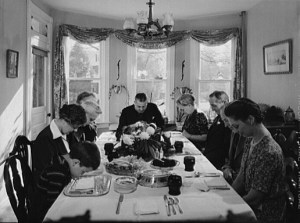 In 1863, President Lincoln declared the final Thursday in November the official Thanksgiving holiday. While Thanksgiving had been celebrated irregularly for several hundred years, it was not an official holiday in the United States and was not annually celebrated until this point. It is significant that Lincoln chose to establish the holiday in 1863 because the American Civil war had been raging for several years. Hundreds of thousands of Americans were dead, the United States was united no more, the nation lay in shambles, and it appeared as though the North wouldn’t win the Civil War. To top it off, Lincoln’s son had died less than a year previous. It was in the midst ofone of the darkest points in American history, and certainly Lincoln’s own life, that he declared that Americans would dedicate a day to thank God for the blessings that they had received. This is a powerful testimony to the degree of faith and dedication Lincoln had toward God. It is also an attitude that is difficult to muster during times of tragedy.
 It is tough to stop and say thanks for what God has given you when everything seems to be falling apart. Often, disaster prompts people to turn and ask: “Where is God in all of this difficulty?” or “Why Doesn’t God do something to fix this for me?” Lincoln offers us a terrific model for our attitudes toward God in times of trial. This attitude can seem almost superhuman, and certainly unattainable for normal people. I’d suggest that this is probably the case. But, while it may be impossible for men to be thankful in all circumstances, it is certainly isn’t impossible for God to create an attitude of thanks in man’s heart. I’d argue that this is a product of intentional effort and practice, that God aids us in accomplishing.
 The city of Butte Montana is built over a mine which had been on fire for over twenty years. This was not a roaring blaze, but rather a smoldering fire that simply kept burning year after year. The fire was accidentally set by a fellow named Henshaw, who left a candle burning unattended on a pine beam. The beam caught fire. The fire spread to other beams and kept burning for decades. This is at least partially due to the miners managing to deprive the fire of oxygen, which kept it from burning out of control but also prolonged the burn.
 Several times in the last few months, while scrolling my Facebook feed, I have come across friends who have posted those annoying fake news stories, that are technically “parodies”, but are not identifiable as parodies in any way, apart from reading the home page of the website it was originally posted on. These posts are usually political, outrageous, completely fabricated, and designed to induce rage in the reader. The thing that has blown me away is that on several occasions I’ve read where a comment will point out that the article is fictional, and the follow up comments will continue to pile on with rage about how “it might as well be true” or “that’s the sort of thing <insert some group here> would actually do.” In short, it doesn’t matter whether or not they’re true, these articles become an excuse to pour fuel on the fire of rage at an ideological group. They are, what I refer to as “rage porn.” They exist for the sole purpose of feeding an emotional state. They become an excuse to express rage and fury on the internet. Rage porn isn’t limited to the fake stories. There are whole websites that do the same thing with single line quotes and mischaracterizations. In these cases, the news articles will feature a single sentence and an editorial about how evil the speaker and everyone associated with them is. There is not attempt at context or intelligent engagement. The only objective is eliciting an emotional response, because anger is political strength in our culture.
 Believers have no place in their lives for stoking the flames of rage over politics or anything else. We may mourn over sin in the world. We can feel free to disagree with the actions of others. We can speak out for Christ and the protection of the innocent and helpless. At the end of the day, we must love those who Christ bled and died for. We need to pray for the folks we would be tempted to judge and love the folks we are more tempted to despise. It’s important to note that love involves more than lip service. If I rage at and trash talk a person, then explain that I love them; I am not doing much in the way of demonstrating my love toward them. Our call is to serve and to love concretely. This isn’t easy. Turning to reading materials that inflame our rage at “the enemy” does little to produce the sort of holiness that Christ is directing us to.
 One of the biggest blessings I have experienced during my 2 years as a small town pastor has happened during my visits to the local nursing home. While there, I have met several married couples who have been together for decades longer than I have been alive. I have enjoyed watching couples eat together and spend time visiting. I am inspired by these folks and aspire to be together with my wife decades after we both said “I do.” To this end, I have been reading about the difference between couples who divorce and those who remain married for years. One of the interesting tidbits I came across in my reading was related to a decades-long study observing married couples. This study produced an interesting revelation regarding communication between spouses. Couples who exchanged insults or harsh words 5 out of every 100 verbal exchange tended to not divorce. If you increase the number of disparaging remarks to 10 out of every 100 exchanges, the likelihood of divorce increased dramatically. It hardly seems like a big deal, but careless words can take a toll on any relationship. Perhaps this is more so the case with marriage because husbands and wives make themselves vulnerable to each other as a part of their intimate relationship. In that setting, it doesn’t take much to wound each other significantly. The book of Proverbs makes a great comment on this matter: “The words of the reckless pierce like swords, but the tongue of the wise brings healing.”
 There’s a saying that originated in AA: You are only as sick as your secrets. The more an addict hides their sickness, the worse it will become. Without outside assistance, recovery is nearly impossible. This is particularly the case with pornography addiction. Recovery from pornography addiction comes with some significant hurdles to beginning and sustaining recovery. Perhaps the biggest challenge in beginning the pr ocess of recovery is overcoming the shame associated with the addiction. This is particularly the case because of the social stigma accompanying sexual problems. This stigma and its bedfellow, shame, keep pornography addicts hiding in the darkness, often knowing that they need help, but unwilling to seek it out of fear of the judgement of others. This is particularly the case for married addicts, who risk losing their spouse by coming clean about their problem. The secretiveness makes recovery nearly impossible because of the nature of addiction. Simply put, addiction is a disease in which the stimulus reward process in the brain begins to dominate the addict’s behavior. The process reaches a point where the addict simply cannot stop using. In fact, one of the diagnostic criteria for addiction is repeated, failed attempts to control using. Pornography addicts may do this by deciding to quit using altogether, only to start again later. They may also try to come up with artificial ways of limiting their pornography consumption or the time spent searching for or looking at porn. These efforts inevitably fail. Secrecy eliminates the support essential to the recovery process for the following reasons:
 One of the major difficulties with opening up about pornography addiction is finding appropriate people to begin talking with. Ministers or counselors are a decent place to start. Both are common in most communities. I also recommend Samson and the Pirate Monks by Nate Larkin or through the associated website:
  One of the newest trends in men’s grooming is premium shaving gear. This includes all sorts of oils, different shaving cream styles, suggested variations in shaving ritual, and assorted styles of razors. Most of these products are marketed with the basic premise that they are part of rediscovering manhood or some aspect of being a man that is authentically male. A few weeks ago, I came across an old safety razor at an antique sale, and having read all sorts of material on how they were more of a Mercedes shaving experience compared to my Pinto experience with the disposable razor, I invested $3 on a 60-year old shaver. After thoroughly researching the technique involved, I made my first few attempts at grooming with my antique razor. Incidentally, I also learned all about the proper use of a styptic pencil. For those unfamiliar with the styptic pencil, it is used to staunch blood flow for minor cuts and nicks. I also learned that the reason that multi-bladed modern razors exist is because shaving with a safety razor is difficult, more time consuming, and potentially much harder on your face. The other thing I discovered is that shaving with an antique razor, the way my grandfather probably did, didn’t make me feel more manly. I didn’t feel like I had discovered some secret to manhood. Really, all of the mystique of the experience seems to be a little overstated. Perhaps I am doing it wrong. Perhaps when I have completed the hazing period and have the scars to prove it, then I will understand. More likely, I suspect that the ads are attempting to tap into a deep-seated need in our culture. Many men are searching for a definition of manhood because they aren’t certain as to what it really means to be a man. They don’t have a clear definition or standard by which to measure themselves, and as a result, they struggle with a core component of their identity. We live in a culture that is uncomfortable with manhood and where fathers being estranged from their sons is increasingly common. Boys learn to be men by watching their fathers. They observe, imitate, and learn. Without a father who models manhood, many young men grow up with no real concept of what it means to be a man. Such young men must teach themselves about manhood. Self-taught men often grow up with learning about manhood from pop culture, peers, or not at all. Many live with a need, whether it is conscious or not, to be validated as a man or find manhood standards to live up to. These often materialize as success at work, sexual dominance, or even being the opposite of their own dads. They need not be so overt, as some men live out this need by simply swallowing it or drifting in their life course.
 Ultimately, if you ask most males what it means to be a man you will get a hodgepodge of activities that men associate with manhood and even some isolated values that are associated with male identity. What is far less common is a clear definition of the foundational values or focus of manhood and from where they are derived. This results in some perplexing behaviors that are labeled “being a man” that are likely far from a complete male identity.
 In Genesis 5:3, after the fall of man into sin, Adam has a son. Interestingly, the text says that Adam’s son was in Adam’s likeness. The reason for this shift is that man is now sinful. Instead of being as we were created to be, we are fallen. All people fall short of what they were meant to be. However, in Jesus we see the perfect representation of God and man without sin. In Him, we see what we were meant to be. Men may wander, chasing after images of manhood that fall well short of the ideal, because in Adam, we are fallen. In Christ, we can be what we were created to be. In fact, Paul writes that those who are in Christ are new creations. They become new for the purpose of imitating Christ. We can rediscover manhood in Him. The beginning of recovering real manhood is recognizing that He is the perfect model for us to emulate.
 After 15 years as a professional minister, working with kids for 13 of those years, I have watched all sorts of young people grow up and make decisions to continue in the faith of their youth or opt to walk away. I have also read arguments as to who or what is usually at fault for the exodus of young people from the church. Colleges with secular agendas, public high schools, federal education standards, pop culture, and television are among the favorite targets. While all of these things may play a part in the trend, one of the major factors that gets far less attention is parental involvement. While there is no guarantee that anything will guarantee that kids will continue in the faith after growing up, there are several common factors I have observed that influence outcomes enormously.
 Pray with and for them. Prayer is like breathing to spiritual life and development. It’s also powerful and effective. Going before God and raising up your kids daily is important. It’s also important to teach them how to pray and its importance. Thanking God together, praising Him in prayer, learning to confess our sins against Him, and seeking His assistance in our lives are all practices we teach our children when we pray for them.
 Willard F. Harley’s excellent marriage book His Needs Her Needs, is an exploration of the major emotional needs of husbands and wives. He asserts that the major cause of extramarital affairs is unmet needs, spouses rely on each other to have their needs met. When one partner goes long enough without major needs being met, they are more susceptible to temptation. He presents the 5 most important needs for each spouse, interestingly demonstrating how the corresponding need in the opposite gender can either compliment or conflict with it. For example, the most important emotional need for wives is affection. They need shows of affection, like touching, thoughtful gifts, loving words, etc. The corresponding need in men is sexual fulfillment. Men tend to do well meeting their wive’s affection need during the courting phase of the relationship. However, after marriage meeting the affection need becomes less urgent, though for most men having their own sexual needs met becomes a more pressing concern. As focus on fulfilling the wife’s need for affection dwindles, wives tend to be less in the mood for meeting their husband’s sexual needs, largely because affection in other areas of life is a large part of foreplay. It’s important to note that this cuts both ways. When women become less interested in ensuring their husband’s sexual fulfillment, men become frustrated and are less inclined to put effort toward showing their wives affection. When both parties take a stance of intentional selflessness toward their partner, the system works better. When one or both become overly focused on their own needs, things tend to break down.
 Recreational Companionship- Recreational companionship refers to engaging in activities together. Where women need conversational connection, men need to do fun things with their spouse. During the courting phase of the relationship, this is easier. Dating usually revolves around engaging in activities together. After marriage it’s not uncommon to find it easy to engage in their own hobbies and activities, going their own ways. Men have a need for companionship in activities. They like it when their spouse does things with them. This is largely because men tend to be doers and enjoy action over discussion. Relational companionship need not be active participation, though it’s a good thing when husbands and wives engage in activities together. Wives can watch their husbands, support them, or take an active interest in order to meet this need.
 One of the better books I have read on marriage is His Needs, Her Needs by Willard F. Harley. Harley’s text deals with the major emotional needs that are typical of husbands and wives. He argues that one of the major causes of extramarital affairs is unmet needs in the relationship. Spouses cheat because they are looking to have their needs met. The books operates on the premise that meeting each other’s needs is a way of affair-proofing your marriage. Aside from affair-proofing, meeting the needs of your spouse is a good way of helping to ensure happiness in the marriage. Further, knowing the needs of your spouse is important for selflessly serving her or him.
 Affection– Affection is the expression of care and attention. Acts of affection include hugs, touching (generally non-sexual), holding hands, giving flowers, going for walks, writing love notes, thoughtful gestures, etc. Women largely experience love through shows of affection. During the courting and early stages of the relationship, this need is usually well met. However, as time passes, men often shift out of courting mode and affection wanes.
 Patching Cracks