
 This blog post started out as a brief comment on an article from Mental Floss that I was sharing on my Facebook page. It slowly evolved into a rant. I decided it was an important enough idea to share publicly. The link is a collection of advertisements from 70 plus years ago that use overt shaming of women in order to convince them to buy products. The gist of most of these ads is simple: you are not pretty or hygienic enough for a man to love you. The article points out how ridiculous and offensive this approach to advertising is. Click the link to read it in depth. It’s an interesting read and Mental Floss is a pretty awesome website.
selling-shame-40-outrageous-vintage-ads-any-woman-would-find-offensive
In particular, the novelty of the ads featured in the article is interesting, but the most fascinating part is the explanation about how advertising set out to make women feel inferior in order to sell them products. Advertising has changed a great deal in the sense that it has gotten more subtle and sophisticated, but it hasn’t changed that much in how it devalues women in order to convince them to consume products. It seems like most television and advertising has geared itself toward a select few messages, most of which can be boiled down to: “You’re not happy” or “you’re not adequate.” There are variations of these messages, including: “your family isn’t happy, but they could be if you use our product.” The vintage ads in the article are offensive, but they sell with the same message as most Cosmo covers and weight loss products. “You aren’t as good as our model, but you could be.” There’s a terrible trick built into the whole scheme as well. Which is that it’s a shell game. You chase the elusive prize, but even when you find it, you don’t. If you reach the “ideal” standard, the ads will keep telling you “you’re not happy” or “not good enough.” These advertisements and messages are everywhere, telling our wives and daughters to question themselves and telling young men that these are the standards of beauty that they should lust after.
The truth is that physical attractiveness is far from the most important quality for a woman to possess. Proverbs tells us: Charm is deceptive, and beauty is fleeting; but a woman who fears the LORD is to be praised. Beauty is important in some ways and men tend to be very visual by nature looking for beauty and attractiveness as a part of who they are. These are a part of reality, that we shouldn’t shame or decry, but to worship a standard of physical attractiveness that is unattainable and manufactured is wrong. It is even more wrong to shame women for not perfectly emulating it. God designed us for better than this. Men, in particular, need to lead the way in telling their wives, sisters, and daughters the truth about their value and worth as God’s creatures. Sometimes, my 4-year old daughter gushes about how she will be prettier and everyone will like her if she wears the right dress or has the right hairstyle. I do my best to correct this every time, telling her that I love her because she is herself and because God made her wonderful. The women in our lives are not to be cherished because of their beauty, though my wife and daughter are beautiful. They are worth cherishing because God blessed me with funny, clever, caring, awesome women that make my life better. I learn to love God more and be more like Jesus because of my wife and daughter. It’s hard to love my wife like Christ loved the church. It’s easy to forget that Eve was created as a perfect counterpart to Adam, to be cherished and valued as a gift. We need to do the same. It drives me crazy to think that my wife and/or daughter would ever think they are anything less than a treasure. I am amazed at how my wife becomes more beautiful every day and my daughter looks more like her all the time. I am even more amazed that them being so pretty is the least of their great attributes. Loving, respecting, honoring, and cherishing women is a blessing and a responsibility that all Godly men ought to embrace.
***Edited after posting to clarify a few ideas and fix a few awkwardly phrased sentences.***
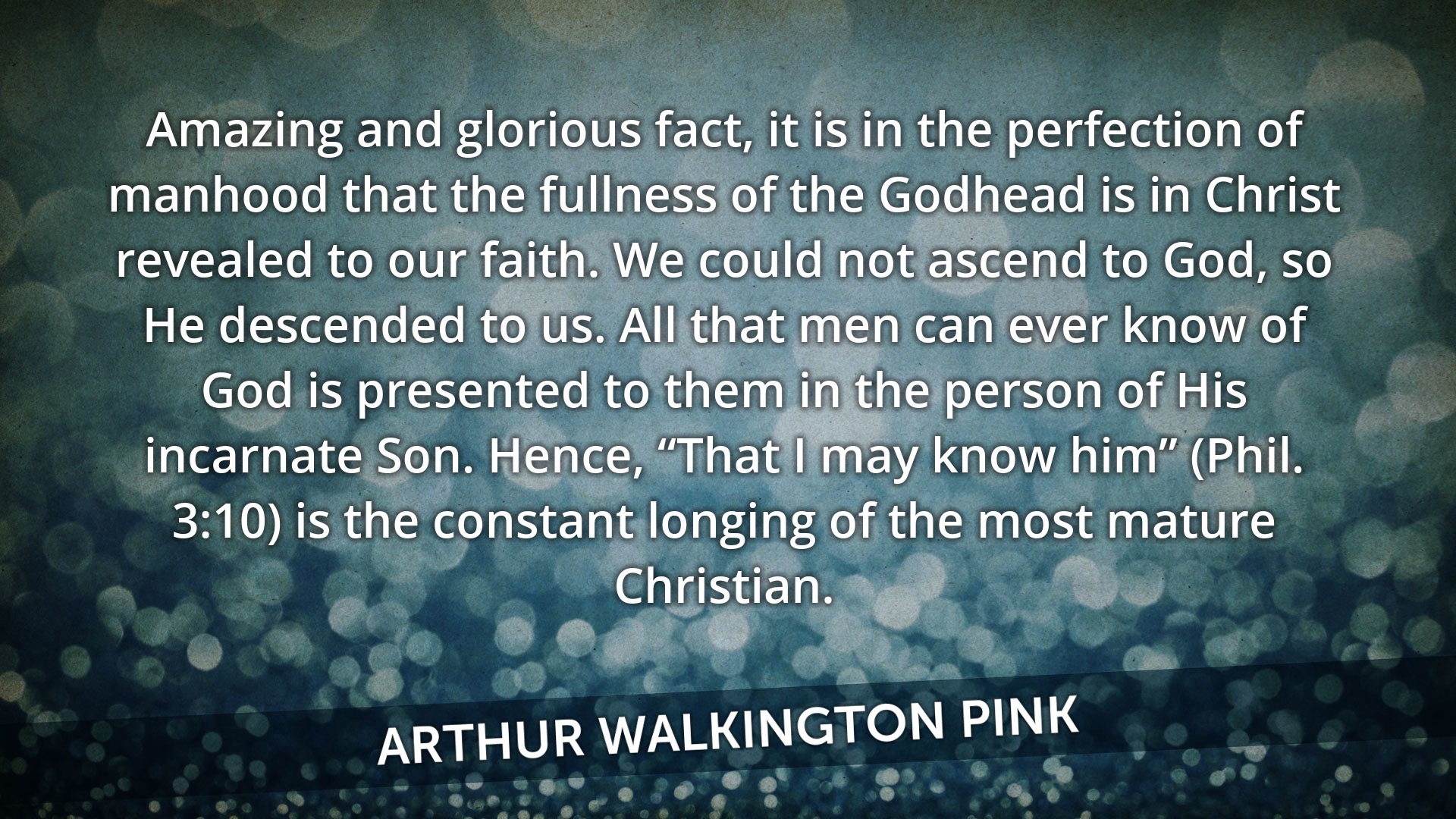

 The topic of manhood is complicated and will take more than one post to properly explore. In the short term, it’s important to establish a basic concept of manhood from which to work. I’d suggest that the place to start is with the source of manhood identity that is built into our world: Boys learn to be men by watching their fathers. This is because parents stand in God’s place in the lives of their children for the first several years of their lives. They provide life, food, shelter, moral guidance, correction, etc. Children’s conception of God is often shaped by their perception of their dads. Genesis tells us that when God created man, He created them in His own image. Fathers (and all men for that matter) are supposed to be copies of God in many respects. We are to share His heart, passions, loves, understanding of family, and work. When dads fail to model this lifestyle and teach their boys to do the same, they create problems. Fortunately, God provides us a more clarified example of manhood in the person of Jesus, who is God made flesh. A boy without a good fatherly model to follow can see ideal manhood in Jesus. When we choose to follow Jesus, our job is to learn to be like him through a lifetime of training, which is discipleship. This is why Christ’s self-sacrificing love and attitude of humble service is the example for husbands. He demonstrates the ideal manner of intimate relationship through his relationship with the church.
 It’s easy to picture Jesus as a pollyanna-type figure or as the feathered haired guy in a bathrobe that we all encountered on flannel graphs in Sunday School as kids. Fortunately, the tame version of the Son of God is far from accurate. C.S. Lewis captured Jesus’ identity best when he wrote: “He’s not safe! But, he’s good.” Jesus’ integrity, passion, penchant for action, grace, wisdom, willingness to speak openly (even offensively if necessary), self-sacrificing service, and lifetime focus on making the world better are just a few of the qualities that make Jesus is the ideal standard of manhood. He is the ideal mold from which men were meant to be cast. It is from Him that we learn how God desires us to be. Once we know, our job is to enter training to become like him.
 One of the newest trends in men’s grooming is premium shaving gear. This includes all sorts of oils, different shaving cream styles, suggested variations in shaving ritual, and assorted styles of razors. Most of these products are marketed with the basic premise that they are part of rediscovering manhood or some aspect of being a man that is authentically male. A few weeks ago, I came across an old safety razor at an antique sale, and having read all sorts of material on how they were more of a Mercedes shaving experience compared to my Pinto experience with the disposable razor, I invested $3 on a 60-year old shaver. After thoroughly researching the technique involved, I made my first few attempts at grooming with my antique razor. Incidentally, I also learned all about the proper use of a styptic pencil. For those unfamiliar with the styptic pencil, it is used to staunch blood flow for minor cuts and nicks. I also learned that the reason that multi-bladed modern razors exist is because shaving with a safety razor is difficult, more time consuming, and potentially much harder on your face. The other thing I discovered is that shaving with an antique razor, the way my grandfather probably did, didn’t make me feel more manly. I didn’t feel like I had discovered some secret to manhood. Really, all of the mystique of the experience seems to be a little overstated. Perhaps I am doing it wrong. Perhaps when I have completed the hazing period and have the scars to prove it, then I will understand. More likely, I suspect that the ads are attempting to tap into a deep-seated need in our culture. Many men are searching for a definition of manhood because they aren’t certain as to what it really means to be a man. They don’t have a clear definition or standard by which to measure themselves, and as a result, they struggle with a core component of their identity. We live in a culture that is uncomfortable with manhood and where fathers being estranged from their sons is increasingly common. Boys learn to be men by watching their fathers. They observe, imitate, and learn. Without a father who models manhood, many young men grow up with no real concept of what it means to be a man. Such young men must teach themselves about manhood. Self-taught men often grow up with learning about manhood from pop culture, peers, or not at all. Many live with a need, whether it is conscious or not, to be validated as a man or find manhood standards to live up to. These often materialize as success at work, sexual dominance, or even being the opposite of their own dads. They need not be so overt, as some men live out this need by simply swallowing it or drifting in their life course.
 Ultimately, if you ask most males what it means to be a man you will get a hodgepodge of activities that men associate with manhood and even some isolated values that are associated with male identity. What is far less common is a clear definition of the foundational values or focus of manhood and from where they are derived. This results in some perplexing behaviors that are labeled “being a man” that are likely far from a complete male identity.
 In Genesis 5:3, after the fall of man into sin, Adam has a son. Interestingly, the text says that Adam’s son was in Adam’s likeness. The reason for this shift is that man is now sinful. Instead of being as we were created to be, we are fallen. All people fall short of what they were meant to be. However, in Jesus we see the perfect representation of God and man without sin. In Him, we see what we were meant to be. Men may wander, chasing after images of manhood that fall well short of the ideal, because in Adam, we are fallen. In Christ, we can be what we were created to be. In fact, Paul writes that those who are in Christ are new creations. They become new for the purpose of imitating Christ. We can rediscover manhood in Him. The beginning of recovering real manhood is recognizing that He is the perfect model for us to emulate.
 Patching Cracks