 Willard F. Harley’s excellent marriage book His Needs Her Needs, is an exploration of the major emotional needs of husbands and wives. He asserts that the major cause of extramarital affairs is unmet needs, spouses rely on each other to have their needs met. When one partner goes long enough without major needs being met, they are more susceptible to temptation. He presents the 5 most important needs for each spouse, interestingly demonstrating how the corresponding need in the opposite gender can either compliment or conflict with it. For example, the most important emotional need for wives is affection. They need shows of affection, like touching, thoughtful gifts, loving words, etc. The corresponding need in men is sexual fulfillment. Men tend to do well meeting their wive’s affection need during the courting phase of the relationship. However, after marriage meeting the affection need becomes less urgent, though for most men having their own sexual needs met becomes a more pressing concern. As focus on fulfilling the wife’s need for affection dwindles, wives tend to be less in the mood for meeting their husband’s sexual needs, largely because affection in other areas of life is a large part of foreplay. It’s important to note that this cuts both ways. When women become less interested in ensuring their husband’s sexual fulfillment, men become frustrated and are less inclined to put effort toward showing their wives affection. When both parties take a stance of intentional selflessness toward their partner, the system works better. When one or both become overly focused on their own needs, things tend to break down.
Yesterday I posted an article that looked at the 5 most important needs to women. The following are the 5 most important emotional needs for husbands:
• Sexual fulfillment- Men are sexual and sexuality tends to be the most important need for many men. Please note that this is being classified as an emotional need, not a physical one. There is a tendency to think of men’s sexuality as being a mere physical need, but men largely experience affection sexually. There is a element of physical need, but the emotional element cannot be ignored. It is to men what affection is to women. Men’s sexuality is usually deeply connected with their sense of identity, which makes it important for this need to be met, as not having this emotional need met will affect the husband to his core.
•  Recreational Companionship- Recreational companionship refers to engaging in activities together. Where women need conversational connection, men need to do fun things with their spouse. During the courting phase of the relationship, this is easier. Dating usually revolves around engaging in activities together. After marriage it’s not uncommon to find it easy to engage in their own hobbies and activities, going their own ways. Men have a need for companionship in activities. They like it when their spouse does things with them. This is largely because men tend to be doers and enjoy action over discussion. Relational companionship need not be active participation, though it’s a good thing when husbands and wives engage in activities together. Wives can watch their husbands, support them, or take an active interest in order to meet this need.
• Physical Attractiveness- This is a harder need to understand for many people. Men are very visual creatures. They tend to experience a lot of sexual attraction through what they see, which is why pornography for men is largely visual, because men respond to visual stimulation. This doesn’t mean that the wife must fit into the same dress she wore on their wedding day or resemble a supermodel at all times. Rather, a wife’s attention to visual cues is important. It’s generally important to men that their wives take care of themselves or try to look attractive. I’ve spoken to men who lament that their wives wear lingerie with less frequency the longer they are married or stop taking care of themselves physically altogether. It sounds shallow and crass, but it’s more a product of how men are hardwired. It’s not uncommon for men to become frustrated when they find their wives less attractive, but cannot discuss it because of the overall sensitivity of the subject matter.
• Domestic support- Whereas women often have a need for their husbands should work to support the family, men tend to want for their wives to help maintain and ordered household. This may come across as a desire for the ideal 1950s TV wife. However, it’s more a need for a spouse that helps take care of the home. How pressing this need is depends on the husband and the family composition. Many men are happy to help take care of domestic responsibilities, but feel a need for their wife to help with cooking, cleaning, and childcare.
• Admiration- Men have an inborn need to be respected and looked at with admiration. When a man feels disrespected or looked down upon by their wife, their pride can be significantly wounded. This need is generally a counterpart to family commitment. Women have an emotional need that the husband be committed to caring for and raising the family. Men, on the other hand, have an emotional need to be looked on as the leader in the family. They have a need to be treated with respect and admiration.
The key to understanding the proper handling of emotional needs as presented by Mr. Harley in his book is a degree of selflessness. Meeting needs in the marital context works best when both partners set out to meet their spouse’s needs without concern for seeking out the meeting of their own needs or judging your partner’s needs. Further, communication over these things is important. People will generally vary in their relational needs. Open communication is key to helping each other know what needs to be done in order to meet needs effectively.


 My kids spent last weekend on a ranch in the foothills of the mountain range near our town. The ranch is the home of one of the elders from my church and his family. The kids love spending time there chasing cows, riding horses, feeding chickens, and doing all the other things they do on the ranch. With the children away for a couple days, my wife and I were free to take a weekend away mini-vacation. We spent the night at a bed and breakfast situated in a ghost town; we then spent the day christmas shopping; and finally spent a night at home alone together. We do these mini-vacations twice a year, and have found that they are a perfect opportunity to spend time together, focusing on each other. We love our kids, but they demand a great deal of attention. I don’t begrudge them that attention, and in fact, feel that it’s our duty as parents to love our children and meet their emotional and relational needs. The challenge that comes with meeting the hefty attention and emotional needs of children is in maintaining a healthy relationship with each other. It’s easy for the marriage to go on the back burner when you’ve got kids to attend to. I’ve written several articles on the importance of date nights. The mini-vacation is a step beyond date night. It’s taking a day or two away to be together, alone. I know couples who haven’t spent days alone together in years, since they were first married, because of the demands of parenting. My wife and I agreed that keeping our relationship vital was good for us and for the kids, so we are intentional about planning these overnight dates a couple times a year. The trick is that it’s not an instant success. Weekends away need to be approached with appropriate expectations and with a degree of careful planning to ensure their success. Here are a few things we have recognized and learned from our experiences:
 Make Careful arrangements for Your Children: As important as the time together is, your first responsibility is for the safety and care of your children. The plans you come up with for their care need to be carefully considered. They need to be comfortable with the arrangement. The person watching them needs to be responsible and knowledgable in caring for kids. There needs to be plans in place in the case of an emergency, and you need to plan for their care and comfort. Family is ideal for this sort of arrangement, particularly grandparents. Another possibility is utilizing a sitter. I know couples who take turns watching each others children to support date nights. Taking turns with another couple watching watching kids is another way to make the weekend away possible.
 It probably won’t fix the problem for good. It may help, but you’ll likely still need to work at it. Another way that realism is important is in the area of romance. Wives, frustrated with their husband’s lack of romantic efforts, may not find that their husband is instantly transformed into Don Juan. Husbands who are looking for their wives to suddenly have a supercharged libido, may wind up frustrated. In both cases, unrealistic expectations can sour the weekend. Both of these problems are best dealt with through communicating with each other about the frustrations. The best plan is to be realistic and have realistic expectations about your time away.
 One of the biggest blessings I have experienced during my 2 years as a small town pastor has happened during my visits to the local nursing home. While there, I have met several married couples who have been together for decades longer than I have been alive. I have enjoyed watching couples eat together and spend time visiting. I am inspired by these folks and aspire to be together with my wife decades after we both said “I do.” To this end, I have been reading about the difference between couples who divorce and those who remain married for years. One of the interesting tidbits I came across in my reading was related to a decades-long study observing married couples. This study produced an interesting revelation regarding communication between spouses. Couples who exchanged insults or harsh words 5 out of every 100 verbal exchange tended to not divorce. If you increase the number of disparaging remarks to 10 out of every 100 exchanges, the likelihood of divorce increased dramatically. It hardly seems like a big deal, but careless words can take a toll on any relationship. Perhaps this is more so the case with marriage because husbands and wives make themselves vulnerable to each other as a part of their intimate relationship. In that setting, it doesn’t take much to wound each other significantly. The book of Proverbs makes a great comment on this matter: “The words of the reckless pierce like swords, but the tongue of the wise brings healing.”

 In the Bible’s account of the fall of man into sin, God calls Adam to account for breaking the only rule that had been given to them for living in the Garden of Eden. They had eaten of the forbidden fruit. The Bible indicates that Adam was standing right there and yet, said nothing as Eve was tempted. Adam isn’t innocent at all. He neglects his role as the spiritual leader in the family by saying nothing to correct the falsehoods in the serpent’s arguments. Adam stands by and allows everything to f all apart, then participates in the rebellion by eating the fruit. His problem is essentially passivity. God confronts him by pointedly asking: “Have you eaten from the tree that I commanded you not to eat from?” Adam’s response is characteristic of the passivity that got him there in the first place: “The woman you put here with me- she gave me some of the fruit from the tree and I ate it.” Notice what he did there: he blamed God and the woman before mentioning his own actions. It’s HER fault and YOU put her here! Eve in turn, blames the snake for tricking her. This exchange has essentially turned into a template for unhealthy marital interactions. Many an argument between spouses gets stuck in finger-pointing. One or both partners works to pin responsibility for some injustice onto the other. Accepting responsibility is difficult and it’s usually a poor tactic for winning a fight. Often, the best tactic appears to be either denying guilt or justifying behavior.
 Denying guilt is easy to understand. If Adam had simply said: “I didn’t do anything,” it would be denying. Arguing results in heated emotions that can prevent individuals from recognizing their own culpability or even recognizing that a fight has moved well past the point of making sense. Sometimes arguments perpetuate because one or both spouses are angry and simply want the satisfaction of forcing their partner to take responsibility for the fight.
 One of the newest trends in men’s grooming is premium shaving gear. This includes all sorts of oils, different shaving cream styles, suggested variations in shaving ritual, and assorted styles of razors. Most of these products are marketed with the basic premise that they are part of rediscovering manhood or some aspect of being a man that is authentically male. A few weeks ago, I came across an old safety razor at an antique sale, and having read all sorts of material on how they were more of a Mercedes shaving experience compared to my Pinto experience with the disposable razor, I invested $3 on a 60-year old shaver. After thoroughly researching the technique involved, I made my first few attempts at grooming with my antique razor. Incidentally, I also learned all about the proper use of a styptic pencil. For those unfamiliar with the styptic pencil, it is used to staunch blood flow for minor cuts and nicks. I also learned that the reason that multi-bladed modern razors exist is because shaving with a safety razor is difficult, more time consuming, and potentially much harder on your face. The other thing I discovered is that shaving with an antique razor, the way my grandfather probably did, didn’t make me feel more manly. I didn’t feel like I had discovered some secret to manhood. Really, all of the mystique of the experience seems to be a little overstated. Perhaps I am doing it wrong. Perhaps when I have completed the hazing period and have the scars to prove it, then I will understand. More likely, I suspect that the ads are attempting to tap into a deep-seated need in our culture. Many men are searching for a definition of manhood because they aren’t certain as to what it really means to be a man. They don’t have a clear definition or standard by which to measure themselves, and as a result, they struggle with a core component of their identity. We live in a culture that is uncomfortable with manhood and where fathers being estranged from their sons is increasingly common. Boys learn to be men by watching their fathers. They observe, imitate, and learn. Without a father who models manhood, many young men grow up with no real concept of what it means to be a man. Such young men must teach themselves about manhood. Self-taught men often grow up with learning about manhood from pop culture, peers, or not at all. Many live with a need, whether it is conscious or not, to be validated as a man or find manhood standards to live up to. These often materialize as success at work, sexual dominance, or even being the opposite of their own dads. They need not be so overt, as some men live out this need by simply swallowing it or drifting in their life course.
 Ultimately, if you ask most males what it means to be a man you will get a hodgepodge of activities that men associate with manhood and even some isolated values that are associated with male identity. What is far less common is a clear definition of the foundational values or focus of manhood and from where they are derived. This results in some perplexing behaviors that are labeled “being a man” that are likely far from a complete male identity.
 In Genesis 5:3, after the fall of man into sin, Adam has a son. Interestingly, the text says that Adam’s son was in Adam’s likeness. The reason for this shift is that man is now sinful. Instead of being as we were created to be, we are fallen. All people fall short of what they were meant to be. However, in Jesus we see the perfect representation of God and man without sin. In Him, we see what we were meant to be. Men may wander, chasing after images of manhood that fall well short of the ideal, because in Adam, we are fallen. In Christ, we can be what we were created to be. In fact, Paul writes that those who are in Christ are new creations. They become new for the purpose of imitating Christ. We can rediscover manhood in Him. The beginning of recovering real manhood is recognizing that He is the perfect model for us to emulate.
 After 15 years as a professional minister, working with kids for 13 of those years, I have watched all sorts of young people grow up and make decisions to continue in the faith of their youth or opt to walk away. I have also read arguments as to who or what is usually at fault for the exodus of young people from the church. Colleges with secular agendas, public high schools, federal education standards, pop culture, and television are among the favorite targets. While all of these things may play a part in the trend, one of the major factors that gets far less attention is parental involvement. While there is no guarantee that anything will guarantee that kids will continue in the faith after growing up, there are several common factors I have observed that influence outcomes enormously.
 Pray with and for them. Prayer is like breathing to spiritual life and development. It’s also powerful and effective. Going before God and raising up your kids daily is important. It’s also important to teach them how to pray and its importance. Thanking God together, praising Him in prayer, learning to confess our sins against Him, and seeking His assistance in our lives are all practices we teach our children when we pray for them.
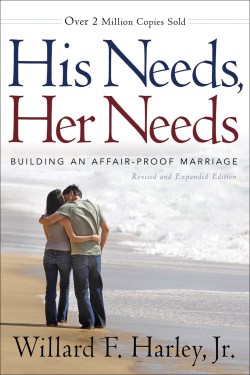 One of the better books I have read on marriage is His Needs, Her Needs by Willard F. Harley. Harley’s text deals with the major emotional needs that are typical of husbands and wives. He argues that one of the major causes of extramarital affairs is unmet needs in the relationship. Spouses cheat because they are looking to have their needs met. The books operates on the premise that meeting each other’s needs is a way of affair-proofing your marriage. Aside from affair-proofing, meeting the needs of your spouse is a good way of helping to ensure happiness in the marriage. Further, knowing the needs of your spouse is important for selflessly serving her or him.
 Affection– Affection is the expression of care and attention. Acts of affection include hugs, touching (generally non-sexual), holding hands, giving flowers, going for walks, writing love notes, thoughtful gestures, etc. Women largely experience love through shows of affection. During the courting and early stages of the relationship, this need is usually well met. However, as time passes, men often shift out of courting mode and affection wanes.
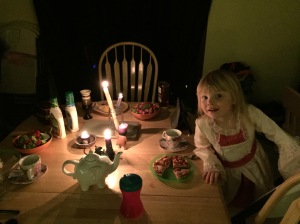 The last few days, which were supposed to be days off, wound up being impromptu work days for me. When I came home this evening, my 3 year old attacked me with pleas for attention and play time. It’s important to understand that as a dad and a follower of Jesus, I consider it my duty to love my daughter in a way that shows her who Jesus is. It’s a job I take very seriously. So, I spent some time playing, but I had to start making dinner. It was late and I was tired, so dinner was not going to be anything spectacular. I put a frozen pizza in the oven and made sandwiches and salads for my wife and I, all the while my daughter was danced around me in an effort to get my attention. Then, I had an idea. I put on the kettle to boil and made tea in her teapot, one I picked up specifically for tea parties with her. As soon as she saw it out and me filling it with water, she started squealing about having a tea party. I set the table with candles, put out teacups and saucers, put her in her fancy dress, and put on my suit. My wife quickly joined the act, putting on a dress. The result was a
  tea party with our little girl over a regular dinner of frozen pizza and salads. It’s not an elaborate daddy-daughter date night, but throughout dinner she repeatedly exclaimed how excited she was to have a tea party for dinner. It wasn’t my preferred daddy-daughter day together. However, given the brief time I had available to plan dinner, our impromptu candlelit tea party was a huge hit with one of the people who matters most to me.


 Patching Cracks