
“Daddy can fix anything!” This is the new phrase my daughter has learned, which she utters as a source of self-comfort on a near daily basis. Whenever a toy breaks, the car isn’t running right, or anything else goes wrong, she confidently proclaims: “It’s okay. Daddy can fix it.” T his is just one of several mantras she recites when facing difficult situations. Another one that is fairly common is: “Daddy will keep me safe.” I typically hear this comment when she has bad dreams or is afraid of the dark. She believes, with a kind of faith that children are amazingly capable of, that her dad can do anything. This is not unusual. Most children grow to believe that their dads are a sort of superhero. As they grow older and wiser, they come to recognize that dad isn’t a sort of superman, but for now we are both enjoying this phase of her relational development. She feels comfort at the reassurance that I can take care of her. I love having my child look at me as a hero of sorts, and hope to live up to that perception as much as possible. Even more so, I hope to raise kids who my grandkids can look at with awe as children. Raising children who can be superheroes to their own children is a product of intentional effort and an awareness of a basic reality regarding God’s design for the family.
his is just one of several mantras she recites when facing difficult situations. Another one that is fairly common is: “Daddy will keep me safe.” I typically hear this comment when she has bad dreams or is afraid of the dark. She believes, with a kind of faith that children are amazingly capable of, that her dad can do anything. This is not unusual. Most children grow to believe that their dads are a sort of superhero. As they grow older and wiser, they come to recognize that dad isn’t a sort of superman, but for now we are both enjoying this phase of her relational development. She feels comfort at the reassurance that I can take care of her. I love having my child look at me as a hero of sorts, and hope to live up to that perception as much as possible. Even more so, I hope to raise kids who my grandkids can look at with awe as children. Raising children who can be superheroes to their own children is a product of intentional effort and an awareness of a basic reality regarding God’s design for the family.There is an important concept that sits behind this phenomena of children viewing their parents as almost superhuman. It is the same idea that is found in the 10 Commandments and God’s design for the family and our world. The commandments are divided into 2 tables. The first “half” of the law relates to man’s interactions with God. These laws are intended to offer guidance for people in their relationship with God. It is how fallen, limited creatures are to see and interact with the holy, eternal Creator. The second table of the law pertains to man’s interaction with other men. So, the first table relates to interacting with God,  while the second deals with interacting with men. The first law in each table is important and offers a glimpse into God’s design for the world. The first law is: Do not have any other gods. Basically, the command is to honor God. The first law in the second table is somewhat similar: Honor your mother and father. The two laws strongly parallel in concept because parents have a special role in the lives of their children. Specifically, parents stand in the place of God in the lives of their children for the first several years until children reach the point of being able to understand God. Perhaps the English novelist, William Thackeray, put it best when he wrote: “Mother is the name for God on the lips and hearts of little children.” Parents shoulder an enormous responsibility by standing in the position they stand in, because they stand as representatives of God. This is a bit of a double-edged sword. A strong, loving parent can provide their child with an amazing first impression of God’s identity. The downside is that an absent, abusive, or deeply flawed parent can give children an inaccurate perspective on who God is. This is most easily seen with abusive or absent fathers, whose children often grow up with a sense of God being distant or perpetually angry and out to get them. Mind you, this is not a hard and fast rule for all people. Rather, it is an observable trend.
while the second deals with interacting with men. The first law in each table is important and offers a glimpse into God’s design for the world. The first law is: Do not have any other gods. Basically, the command is to honor God. The first law in the second table is somewhat similar: Honor your mother and father. The two laws strongly parallel in concept because parents have a special role in the lives of their children. Specifically, parents stand in the place of God in the lives of their children for the first several years until children reach the point of being able to understand God. Perhaps the English novelist, William Thackeray, put it best when he wrote: “Mother is the name for God on the lips and hearts of little children.” Parents shoulder an enormous responsibility by standing in the position they stand in, because they stand as representatives of God. This is a bit of a double-edged sword. A strong, loving parent can provide their child with an amazing first impression of God’s identity. The downside is that an absent, abusive, or deeply flawed parent can give children an inaccurate perspective on who God is. This is most easily seen with abusive or absent fathers, whose children often grow up with a sense of God being distant or perpetually angry and out to get them. Mind you, this is not a hard and fast rule for all people. Rather, it is an observable trend.Raising a real world superhero is greatly enhanced by an awareness of this dynamic, because a child’s perception of God shapes their understanding of eternal matters. This is particularly the case when we consider the sorts of things God calls His people to be. In the Old Testament, we see God declaring himself to be the protector of the innocent and the helpless. Through His laws and the prophets, God directs His people to care for the poor, outsiders, and the disenfranchised. In the New Testament, we encounter Jesus, the Son of God, who gives us a glimpse of God’s passion, love, mercy, and grace. Further, we are directed to imitate Jesus in our lives and relationships. Inspiring a child on the road to revering God, obeying Him, and imitating His Son is a basic step in the process of raising a real world superhero. In addition, helping them to grow a healthy perception of God’s personality is vital because it enables them to imitate Him correctly, with an eye on the God of holiness, mercy, and grace; rather than an imagined version of God who is petty, overly concerned with our legalistic observances, or worse-still distant and heartless. The Old Testament features a chilling warning that God visits:
…the iniquity of the fathers on the children, on the third and the fourth generations of those who hate Me, but showing lovingkindness to thousands, to those who love Me and keep My commandmentsExodus 20:5-6
This may seem harsh, but is actually just a reflection of this concept. A parent who poorly reflects the character of God to their children will in turn raise kids who learn to poorly reflect His character, and so forth. The consequences of the actions of a parent on their children and grandchildren is an echo of the initial transgression. On the other hand, fathers who raise children who imitate the love, mercy, and just nature of God, will in turn raise grandchildren who do likewise. Ultimately, it boils down to one principle: if we are to raise kids who stand tall as heroes, we must do our best to present to them a heroic personage that is worth following and imitating themselves.
reflect His character, and so forth. The consequences of the actions of a parent on their children and grandchildren is an echo of the initial transgression. On the other hand, fathers who raise children who imitate the love, mercy, and just nature of God, will in turn raise grandchildren who do likewise. Ultimately, it boils down to one principle: if we are to raise kids who stand tall as heroes, we must do our best to present to them a heroic personage that is worth following and imitating themselves.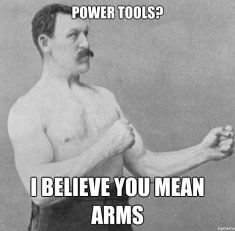 uired that I take the front of the engine off to replace the sensor. After digging through my glove compartment, I found a wrench and a screwdriver. I began working with my meager collection of tools by removing every screw and bolt that matched the phillips head screwdriver and 13 mm wrench. Unfortunately, I had reached an impasse. I walked to a nearby K-Mart and purchased a socket wrench and a couple of sockets. With my new socket wrench in hand, I removed every bolt that matched my new sockets, until I encountered a small bolt that I did not have a socket to fit. Another trip to K-Mart had me working again, until I came across a bolt that required a box end wrench. Another trip and another tool purchase. This continued for the better part of a day, until I had completed the repairs. By the fourth or fifth visit to the store the cashiers started teasing me. Eventually, it became evident that my effort to avoid purchasing an entire set of tools had cost me a great deal of time. The whole process would have been much easier had I possessed all of the tools I needed at the outset of the project. The same is true of many married couples, who start their lives together without adequate relationship tools. When trouble arises and breakdowns occur, they simply do not have the relationship tools and skills they need to fix the issue. Unresolved issues, if they become plentiful enough, can lead to larger and larger problems. Ultimately, too many problems can lead to communication breakdowns, resentments, and divorce.
 times, every spouse must be equipped with the tools necessary to fix the problems that emerge in the relationship. There are all manner of these tools: effective communication skills, healthy arguing, and mutual submission to name a few. Perhaps the most important tools in the marital toolbox are “grace” and “selflessness.” Grace refers to forgiving without reservation. The Bible uses the term to refer to God forgiving people without them having to earn it. It is an act of love. Just think over the history of arguing with your spouse and reflect on how often “old arguments” have come up and extended the conflict. Or consider the times when resentment over some slight has lingered in the relationship. As time passes and these resentments accumulate, a marriage will naturally drift apart. The cure for this is simple: grace. There is an old saying about marriage: “Before you wed, look as critically at the imperfections as possible. After, do your best to ignore them.” Or better yet, do your best to forgive them, even if they don’t deserve it. Many a married man (or woman) will read the previous paragraph and find themselves saying: “Easier said than done! You don’t know my husband (or wife)!” Ultimately, forgiveness requires that the second tool comes into play. Selflessness is the primary attribute of love. One of the most popular Bible verses read at weddings is 1 Corinthians 13: “Love is patient. Love is kind… it is not self-seeking, it is not easily angered, it keeps no record of wrongs…” For all of the qualities given in the chapter, there is the shared condition of selflessness. Real love cannot be about “me.” Real love focuses on the partner in the relationship. This is love that is more than just a warm feeling that fades after the honeymoon ends. It is a life direction that endures even when the marriage is just plain tough. Forgiveness is far easier when I don’t need to win every fight or get my revenge for hurt feelings. Grace is only possible when it arises from selflessness. While these two concepts may seem to be simple enough, they require commitment and hard work. The Bible goes so far as to suggest that we can only accomplish them with God’s help. At a minimum, learning to selflessly consider your partner’s needs and forgive their failings involves repeatedly committing to do so. It is hard enough that the only reason to take on the task is out of love.
 I pray that they become people of integrity – who courageously live their lives based on their beliefs. I want my son and daughter to do great things and live their lives in ways that inspire others to greatness. Truth be told, I doubt my kids will ever fight villains, but as we grow up and put more simplified versions of the world away, we come to recognize that real heroes often do far more ordinary things – everyday – for the duration of their lives.
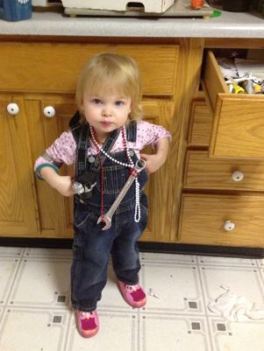 that I hate doing maintenance work. I will happily replace a water pump, but cringe at the thought of changing oil or doing a tuneup. It’s just easier to not do maintenance. The problem, of course, is that not doing maintenance results in frequent breakdowns, poor fuel economy, and shorter lifespan for the vehicle in general. The same is often true of many men. Solving a problem is more interesting to them than working to maintain things. Unfortunately, this tendency often translates into married life.
 love sleep. Perhaps the biggest blessing I have experienced as a parent is the opportunity to see another human being in a similar light to how God sees humanity. As I sit with my cranky child, the verse that keeps running through my head is from Psalm 8.
 with the problem. His response made me angry. He asked me how praying for them was going, also reminding me that Jesus directs his followers to pray for their enemies. I didn’t argue, because I knew I was stuck. This began a process of prayer that changed my life. It was hard to pray for the men in question, largely because I didn’t want to do it. The idea of praying for these guys who had made me miserable for months scalded me. It offended me through and through. Praying for my enemies, and as dramatic as it sounds, they were my enemies, was difficult at first. As time progressed, it became increasingly easier and I learned several important lessons.
 n though the kids sometimes tried to punch you, at least they were attacking you out in the open and to your face. It took my wife and I years to decide to agree to take on ministry employment in a church again. There is a terrible truth about churches that has to be faced by anyone who is (or was) ever a part of one. The people who are meant to become like Jesus through their lives together in the church community, often bear little resemblance to Jesus or what He taught. Over the years, I have spoken with and visited with all sorts of folks who have shared tough stories, ones that I can relate to all too well. Folks were burned by people that were supposed to love and support them. It’s a tragedy that such experiences are so common. While talking with a friend earlier this afternoon, I realized how blessed I was to have been surrounded and supported by some awesome believers who helped my wife and I find rest and healing after a tumultuous time in our lives and relationship with God. The basic lessons and realizations we came to were powerful and important.
 ons I learned was from the Apostle Paul. While studying the second letter to Corinth, I realized that Paul had come to visit the church there and been humiliated and run out of town. A group of preachers, who were more concerned with making money than preaching the gospel, had made a fool of Paul in a debate. Paul then sent Titus to salvage his relationship with the church. He was eventually reconciled with them and the false teachers run off. The thing that’s worth observing here is that Paul was stabbed in the back, mocked, and mistreated by folks who were supposed to be his brothers in Christ. His response was stern, but loving. He did not back down off of the truth, but throughout the whole ordeal he pointed to Jesus as the truth. He did not want payback. He wanted the church to be reconciled. Ultimately, he was just following the example of Christ, who reinstated Peter after he denied even knowing Christ. The lesson to be learned here isn’t that we should jump back into the mess after walking away from those who abused us. Rather, it is a model of forgiveness and grace. It is very easy to fall into bitterness after we are hurt. It is easy to attack and judge. In the end, we need to forgive in order to heal. Nothing keeps a wound fresh more effectively than picking at it forever. I do not believe that Paul simply forget when individuals proved themselves to be untrustworthy. Rather, I’d suggest that he acted “as wise as a serpent and as innocent as a dove.” Love and grace need to rule our attitude and decisions, particularly when dealing with fellow believers.
  e challenge as part of our James sermons series. Since then I have had several members approach me to tell me that they are reading James daily. This has sparked some interesting conversations about how the book has pushed them to reflect on their own lives. It has also prompted me to consider the whole idea of the challenge, particularly as I prepare the 3rd sermon, dealing with James 1:19-27. Several things have come to mind and I hope to explain them in this essay.
 ange that takes place in any person happens as a result of the Holy Spirit convicting you and prompting change. Further still, we are made new and changed as the Spirit aids us in overcoming our sinful behaviors and habits. This change is a process that is rooted in the Holy Spirit’s action in us. God’s actions aside, we cannot read as a passive audience. We must act in response to what we read.
 ned without me realizing it. I started out as a balled up fist of anger, bitterness, and pain. In the name of my addiction, I had hurt those around me and acted despicably. Over time, I got healthier. Then one day I was sitting in a meeting listening to another person talk. I don’t even remember what they were talking about, but I remember hearing them say words that I had said to myself on many occasions. I nearly jumped out of my skin. It was as if I was listening to myself talk about my own addiction. Over the years, I have listened to others in recovery talk about the destruction they brought to those around them, stealing, degrading themselves, and almost every other conceivable sin. I don’t feel sickened by their sins. I feel empathy and I see myself. I hear my own thoughts. I see my own loneliness. I hear the lies I tell myself. Sometimes that’s in the past and other times its today. It is difficult to look at sometimes, but seeing my own sickness in the mirror that is others who are struggling for freedom from the slavery of addiction reminds me of what I am capable of. Remembering where I came from helps keep me free. A friend of mine often tells me that the darker the darkness of the world, the brighter the light of the cross of Jesus.
 Patching Cracks